
Late modern societies in the globalized West do not lack intelligence; they lack something harder to name. Some people say the lack surrounds the disintegration of democracy. My guess it is something simpler… something like “agency.”
I am particularly interested in this because I am devising a teaching pedagogy that wants to establish a mutually reinforcing and adaptive relationship between individual learners and the culture of the classroom. What I noticed in the research is that our evaluation of a new pedagogy, like all of society, is that we are surrounded by dashboards. Economic forecasts update in real time. Climate models project decades into the future. Public health systems track infection patterns down to the postal code. Governments consult policy analysts, data scientists, behavioral economists, and global advisory panels. We manage risk portfolios, carbon emissions, monetary flows, and migration patterns with unprecedented technical sophistication.
And yet, beneath this extraordinary capacity for calculation, something feels fragile. Political speech grows shriller even as governance grows more technical. Citizens oscillate between distrust of institutions and deep dependence upon them. We demand that experts fix our problems and resent them for doing so. We celebrate efficiency while lamenting alienation.
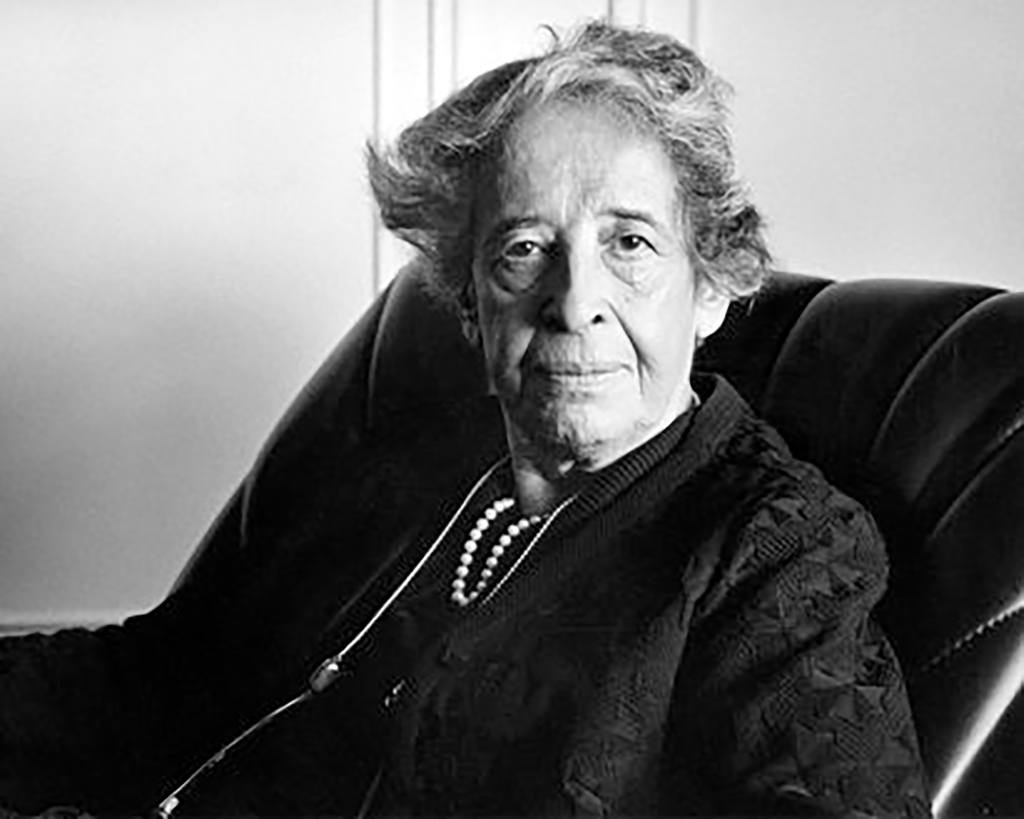
To understand this paradox, it is illuminating to place two major thinkers into conversation: Anthony Giddens and Hannah Arendt. They did not collaborate. They did not share a common intellectual project. But read together, they clarify a defining tension of our time: the structural necessity of technocratic systems and the fragility of political action within them.
I have just spent 3 months reading Giddens, and that was completely worth it. I spent the last 20 years reading Arendt. Giddens helps us understand how late modern societies are built. Arendt helps us see what may be at risk when those societies become governed primarily through technical rationality.
I. Giddens and the Architecture of Modern Systems
Anthony Giddens’ sociology begins with a refusal of easy oppositions. He rejects the idea that individuals are merely puppets of structure, just as he rejects the notion that society is nothing more than the aggregate of free choices. His theory of structuration proposes something more subtle: social structures are both the medium and the outcome of action.
Rules and resources shape what we can do, but those rules and resources only persist because we enact them. Institutions are not external machines. They are recursively reproduced through practice.
This insight is crucial for understanding technocratic rationality. Modern institutions are not alien impositions. They are sustained through our participation—through our trust in banks, our reliance on medical systems, our compliance with regulatory frameworks, and our engagement with digital platforms.
Giddens further argues that modernity is characterized by “disembedding.” Social relations are lifted out of local contexts and reorganized across vast spans of time and space. Money becomes a symbolic token that enables exchange between strangers. Expert systems—legal, medical, financial, scientific—coordinate life across continents.
Modern society runs on abstract systems.
These systems require trust. Most of us cannot personally verify the safety of an airplane engine or the integrity of global financial clearing systems. We trust professional standards, institutional oversight, and accumulated expertise.
In such a world, governance increasingly revolves around risk management. Modernity generates what Giddens calls manufactured risks—climate change, nuclear proliferation, systemic financial collapse—risks created by human innovation itself. Political decision-making becomes anticipatory. It focuses on mitigation, projection, modeling.
The language of politics shifts. Justice competes with efficiency. Freedom competes with stability. Moral debate increasingly intersects with technical assessment.
From Giddens’ perspective, this transformation is not a deviation from modernity; it is modernity’s logical unfolding.
II. Arendt and the Meaning of Action
Hannah Arendt begins elsewhere. Her central concern is not structure but action.
Action is plural. It depends upon the presence of others. It is unpredictable and bound up with what Arendt calls natality—the human capacity to begin something new.
Politics, in her account, is not administration. It is not management. It is not the implementation of expert solutions. It is the shared activity of deliberation and initiative within a public realm.
Arendt’s deepest anxiety about modern society is that this space of appearance is shrinking. Bureaucracy expands. Administration becomes professionalized. Expertise replaces public judgment. Citizens become spectators of processes rather than participants in common world-building.
Her analysis of totalitarianism underscores how thoughtlessness and procedural obedience can replace moral responsibility. But her critique extends beyond extreme regimes. Whenever politics is reduced to technique, something essential is lost.
Where Giddens describes how modern systems operate, Arendt asks whether those systems leave room for action.
III. Technocratic Rationality and Its Logic
Technocratic rationality can be described as the governing logic that emerges when complex societies rely heavily on expert systems and predictive modeling.
Technocratic rationality privileges abstraction; decisions are made far from lived experience. Technocratic rationality operates at scale; governance stretches across nations and networks.
Technocratic rationality prizes optimization: policies are evaluated through metrics and performance indicators. It focuses on risk management. The future becomes a field of probabilities to be controlled.
This rationality does not need to be malicious. It enables vaccination campaigns, infrastructure planning, disaster mitigation, and economic stabilization. Without it, complex societies would collapse.
But technocratic rationality tends to redefine political questions as technical problems. Instead of asking what kind of society we wish to become, we ask what policy instrument most efficiently achieves measurable targets.
Giddens would argue that this development reflects the reflexive character of modernity. As institutions grow more complex, they must monitor and revise themselves. Knowledge feeds back into governance. Systems become self-observing.
Arendt would respond that reflexivity alone does not guarantee freedom. Monitoring processes is not the same as exercising judgment.
IV. Risk and the Diffusion of Responsibility
Modern societies are future-oriented. We anticipate catastrophe and seek to prevent it. Climate models, epidemiological forecasts, financial stress tests—all aim to anticipate disaster.
This orientation toward risk reshapes politics. Leaders are judged not only by what they accomplish, but by what they prevent. Expertise becomes indispensable.
Yet as governance grows more complex, responsibility diffuses. When a financial crisis occurs, who is accountable? The regulator? The trader? The algorithm? The central bank? When climate thresholds are crossed, responsibility is distributed across generations and institutions.
Technocratic systems excel at modeling outcomes but struggle to anchor moral ownership.
Arendt insists that politics requires identifiable actors who stand behind their decisions. Without visible responsibility, citizens experience power as anonymous and opaque.
Giddens would counter that in structurally complex societies, action is always mediated. The challenge is not eliminating mediation, but ensuring reflexive accountability.
The tension remains unresolved.
V. Reflexivity, Identity, and the Shrinking Public Realm
Giddens’ notion of the reflexive project of the self captures another dimension of technocratic modernity. In late modern societies, individuals must actively construct their identities. Tradition no longer provides stable scripts. Biographies become projects.
This reflexivity can empower. But it can also privatize meaning. Individuals curate lifestyles while institutions manage systemic risk.
Arendt’s distinction between the private and the public becomes crucial here. When energy flows primarily into personal optimization—career advancement, wellness regimes, digital self-presentation—the shared world risks neglect.
Technocratic rationality can coexist with intense personal freedom in lifestyle choices. Yet that same rationality may narrow the space for collective action about the shape of the common world.
VI. Trust at the Crossroads
Both thinkers highlight the fragility of trust.
Giddens emphasizes trust in abstract systems. Without it, institutions fail. Markets panic. Public health collapses.
Arendt emphasizes trust in shared judgment—the belief that others can deliberate, speak honestly, and appear publicly in good faith.
Today, trust in both domains wavers. Experts are accused of elitism. Politicians are accused of incompetence. Citizens are accused of ignorance. The result is oscillation: technocratic paternalism on one side, populist revolt on the other.
Neither extreme resolves the underlying tension.
VII. Reclaiming Action Within Systems
The question, then, is not whether we can dismantle technocratic systems. We cannot. Complex societies require expertise.
The deeper question is whether these systems can remain subordinate to political judgment rather than replace it.
Giddens offers a partial answer in his emphasis on reflexivity. Institutions must remain open to critique. Knowledge must circulate. Structures are sustained through practice and can be reshaped through collective agency.
Arendt offers a complementary insight. Citizens must reclaim spaces of appearance—forums where speech and action disclose who they are and what they value. Without such spaces, governance becomes procedural and hollow.
The task is not anti-expertise romanticism. It is re-embedding expertise within a vibrant public sphere.
VIII. The Demanding Hope of Modernity
Modernity will not become less complex. Risk will not disappear. Abstract systems will not shrink to village scale. But complexity does not eliminate natality. Human beings retain the capacity to begin.
If Giddens is right, structures are reproduced through participation. If Arendt is right, action can interrupt routine and create new possibilities. Technocratic rationality becomes dangerous only when it forgets that it is a means rather than an end. Its calculations must remain answerable to public judgment.
The future of democratic life depends on holding these insights together: accepting the structural realities of late modern systems while insisting that freedom requires visible, plural action. The challenge is not to abandon expertise, nor to worship it. It is to ensure that technical rationality remains a servant of political freedom rather than its substitute. In an age of systems, the enduring question is whether we will continue merely to manage the world—or whether we will also dare to appear within it.

 Raymond Klassen - Ideals and Identities
Leave a comment