
Home page – blogroll

Individual and Society: Gabor Maté and Jordan Peterson on Addiction

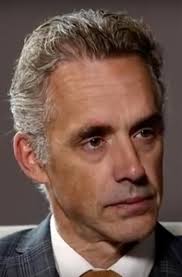
Jordan B. Peterson - IMDb
Dr. Jordan Peterson
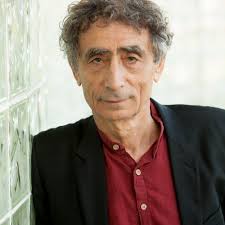
Dr. Gabor Maté (@DrGaborMate) | Twitter
Dr. Gabor Mate

In the following two clips, first from Dr. Peterson, and then from Dr. Mate, you will see two drastically different psychological explanations for rifts between ourselves and the world. The general question is how depression and addiction are related phenomena? Addiction is often considered a symptom of depression. However, it may be better to understand that they are symptoms of a more general malaise of the corruption of what could be more innocent frameworks of private, social, and political parts of our existence. (See my article called “1958” to see the tendency toward technocratic rationality.) In alignment with Dr. Mate, mass society creates conditions which not only corrupt our private, communal and political lives, but open a crack to a kind of metaphysical disparity which plays out as politically “right vs left” in front of our eyes.

Both of these clinical psychologists have enormous followings, and they represent this disparity: Dr. Jordan Peterson (who thinks addiction is a matter of personality) and Gabor Mate (who thinks addiction is a response to the pain of unfulfilled childhood needs, frequently trauma). The difference between the two perspectives is particularly stark. Notice how Dr. Peterson, in the following short clip, talks about dealing with addiction as a “rebuilding of the personality”, which is conceived from the standpoint of the atomized individual. Ultimately, it is an incredibly self-responsible activity.

Peterson – Overcoming Addiction

Contrast this with Dr. Gabor Maté, who asserts in the following video that it is a compassionate presence – essentially a caring presence of an “other” – which works at the origin of addiction and deals with it.

https://www.youtube.com/watch?v=T5sOh4gKPIg
Dr. Gabor Maté: What is Addiction?

One takeaway from this contrast for me is one serious debate that goes to the heart of widespread social malaise, and that is depression. It is my belief that the political “left”, in other words, the ones who believe in the importance of community need to be clear about the mechanics of how they contribute to building resilient individuals. And the “right,” in other words, those who believe in the primacy of the individual towards self-responsibility, need to be absolutely certain that the individual has sufficient tools to take self-responsibility.

I suspect that the individual, as Dr. Peterson conceives her, does not have the requisite skills – or content – to take the kind of responsibility Dr. Peterson urges. Dr. Peterson here, and in other places, offers a conception of the individual that does not have the architecture required to sustain moral responsibility, i.e. responsible for, that is necessary. Dr. Mate points to the core role of significant others in developing that architecture. Dr. Peterson’s perspective of the individual omits such an architecture. The consequences for both sides are enormous, and as political societies, such clarity is needed to avoid being prepared for totalitarian rule, as “Trump as an Agitator” states. That it has taken 70 years for such an awareness to to catch widespread attention may be equated to the blindness of the fact that we have been the cause of climate change; that the world-ending consequences of the alienated individual may be of our own doing.

In other words, Dr. Peterson and Dr. Mate recognize the problem that addiction is a symptom of depression. But Dr. Peterson, pointing to the effectiveness of “religious conversion,” not knowing how to “induce” it can’t draw the connection between dealing with addiction and the operation of religious conversion. That admission shows that the individual self – conceived apart from her surroundings – has no resources for dealing effectively with addiction. Peterson in effect describes a situation where the pathways that reinforce addiction are strengthened but considers it abstractly as if it is just part and parcel of a personality. He is essentially asking, “why the addiction?”

Dr. Mate, on the other hand, poses the question, “why the pain?” And we see that such addiction is sourced in pain and that pain comes from somewhere deeper. This question leads him to situate the person so as to deal with the deeper depression. In other words, by connecting emotional and physical pain and treating them as integrally connected – rather than separate – Mate gets to the heart of the metaphysical illness to which Peterson’s view does not have access.

The stakes are enormous! We need to get this right.


11 responses to “Individual and Society: Gabor Maté and Jordan Peterson on Addiction”

  1. This is not an accurate depiction of Peterson’s views and only picking pieces that support the argument. Peterson deals in the realm of meaning and he starts at childhood with how we develop meaning in our lives and how what we have developed manifests itself in the world. He does not require a religious answer to solve deep human issues, as is suggested, and his book maps of meaning goes as deep into the human experience and psychi as is possible.

    Liked by 1 person

    1. Hi JaEv – Thanks for your comment. I have to admit that I pick pieces, and since I wrote this, I have been exposed to some of Peterson’s later work (even though Maps of Meaning precedes “12 Rules”) He certainly admits that “we are social beings through and through” as I have heard him say in more recent lectures. However, his discussions of Piaget certainly still push his overall thoughts to formal conditions for development – and this to a slightly abstract individual who tends to greater individual sovereignty than I am inclined to agree with. But I very much appreciate this comment, because piecing together a holistic view of Dr. Peterson’s work is important, and again, my view presented is not so holistic.

      Like

      1. Realistically, the social world is not the ideal environment for us anymore. Both Peterson and Mate mention this. Both of them agree native communities have great knowledge and wisdom thats rare in the modern world. What differs for me is that while Mate offers an empathetic rational for pain, which is accurate, Peterson deeply explores what to do with pain besides empathise with it. He does this within a modern context, seeing as however we dislike it, this is the landscape we are living within. He also emphasises tailoring your approach to your own understanding of your own personality, values and goals so you can attach action to meaning. Also tailoring approaches to children based on the child’s personality and not a vague blanket approached insisted apon by Mate. It also seems Peterson has no problem with enjoying present, connected and mutually beneficial relationships with his children and grandchildren. His anger is integrated and so can be applied. Both Mate and Peterson get triggered but I haven’t seen Mate use anger as effectively by choice.

        I see Peterson fully express many emotions, including joy and frustration but rarely to make his companions comfortable, they are sincere. Whereas Mate tends to maintain a monotone. I don’t know if this is an indication of more integrated emotions or simply personality differences.

        Peterson refers to addiction in the stricter sense of substance addiction. Mate refers to it as almost any maladaptive seeking behaivior so it is difficult to compare them. Peterson doesn’t ever deny these behaiviors aren’t influenced by social factors, he rather honestly admits that most of the time we do not have the social structures to heal us, life is bloody hard, with or without these structures. In order to create the life and community you want, you work at it. You don’t wait for your community to heal you when they can’t even heal themselves, you break the cycle yourself and watch as your own and everyone’s lives around you improve. You don’t do it alone as people seem to insist he’s implying. You take responsibility to initiate action and end up creating communities of people doing things together.

        I guess the biggest difference I’ve found is that to me, Mate seems fixated on healing the world, an important maternal role/stage of development a lot of us missed, whereas Peterson seems passionate about living well, taking responsibility for yourself AND others AND your community and inspiring others to do the same, a crucial paternal role. Adult life will be forced on us if we are ready or not but its more helpful if we choose how we engage with the world. Maybe they both have a place. I found Mate before I found Peterson and maybe that order was crucial?

        I was disheartened to read some of Mate’s twitter things reducing Peterson and those who enjoy his work to justifications for anger about change. It’s simplistic and wrong. Also insisting that Petersons anger is at the heart of his autimmunities. While I don’t follow his daughters lion diet, I have found profound help from adjusting my vitamin d and b vitamin levels (Stasha Gominak).

        Mate’s intense focus on the emotional environments impact on genes (I have enjoyed ‘how the body keeps the score’) seems to blind him to ideas about the physical environments impact on genes. I can have the most loving and attuned parents and communities and still inherit/develop autoimmunties generationally from lack of key hormones and nutrients.

        Like

      2. Laura, I really appreciate this response. You have helped me to re-think the either/or way I framed my original post. As you can tell, I favor Mate’s approach, but this is because I believe we have some tendency to overlook socio-environmental causes. That being said, Peterson has shown a kind of empathy in his later work which is refreshing (and is partially informative to his latter well-being, I believe). But I still believe he asserts the atomistic individual – and to me, it seems he does so as an article of faith.

        Like

      3. Juxtaposing these two individuals is interesting on a number of levels. Peterson is profoundly overvalued by a segment of society due to his blustering and affectative posturing who as the authoritative know it all who probably is just showing us the personality behind the person: he got into the field of psychology to “help” others because he knows so much more than everyone else about everything, and not just believes it, but will spend his entire day trying to convince everyone he is the authority on all matters. He skewers himself on his own rhetorical sword by claiming personality type is the root of addiction but is too arrogant to admit he can’t define what personality is let alone find what exact factors are the prime mover….because he thinks like you said the atomized monad, the individual, contains the root of pathology. Maybe so, but what is it then? He can’t or won’t name it. Petersons argument is even more disingenuous by his own very individual failure to reference and discuss his own addiction. Why won’t he go there? Anyone with any knowledge of mate’s work can give us any number of reasons, many of which perfectly explain Petersons manner of acting in the world. My main question of Peterson, is, why be such a dick about everything? What’s with all the pompous, self important, self righteous posturing? Where’s that coming from? Surely Socrates didn’t sit around in Athens getting his point across by being a complete asshole to anyone who disagreed with him. There is a fundamental anger deep inside him that is the reason why I discount most of what he says. It’s coming from the wrong place – it’s as if he’s trying to assert his anger at not being put on a pedestal (until now) and yet still projects this neurotic need to be the authority. His invocation of religious terms are a philosophical dog whistle and confuse the issue even more. By doing this he tells us how much he relies on faith to accept and determine absolutely everything in life, and certainly explains why transgendered people’s desire to be called by terms they want to be called is so offensive to him. His reason? It’s no more complex than it just is wrong, and how dare you question it or me. Peterson is a profoundly pathological cultural figure who is accepted on faith by legions of people who could not and cannot think critically if their lives depended on it. They love him because he tells his audience they are right, and thats what they want to hear. They dont want to be challenged to examine anything, they just want him to tell them they are right. This is why Peterson is wrong and undeserving of attention, but gets it because society and modern discourse has turned to regression and atavism as a response to the challenges of the present. Erich Fromm is just spinning in grave.
        Mate acknowledges the origin of the issue: society as well as modern psychology does not provide a framework for understanding why such problems exist and openly admits in the fields own arrogance it will not admit it does not assess the reasons why the individual cannot accept “responsibility” (meaning, why they cannot act in ways to improve their life situation) before shaming them for not taking responsibility / not acting in the right way or whatever issue. The reason why? Having heard both of these guys speak extensively, Mate owns his own shit and so he sees the world as it is and Peterson does not as he only sees the world the way he wants to see it and gets angry at those who aren’t just like him. There’s a fundamental narcissism about his approach that explains why he is so popular but is the tell why he just should not be given much cultural attention. Mate is unconcerned with matters of needing to be right, he is only concerned with helping others, which Peterson is only superficially concerned with; his primary need is people acknowledging that he is the authoritative source of truth in the world and having his self opinion validated by legions of dittoheads. He is a verbose blabbermouth with a terminal case of verbal diarrhea projecting his own personal pathology onto the world, whereas Mate actually gets it as he is self aware and has no need to run roughshod over everyone who disagrees with him, its not important to him to set up rhetorical strawmen everywhere then beat the stuffing out of them like a big macho bully. Mate knows this is the wrong response because he has what Peterson doesnt have: self awareness of his own character flaws. Watch any video of mates, he will openly share in these from a perspective of wisdom into his own motivations and pathologies. Peterson is just simply not there yet.

        Like

      4. Hi bill, I appreciate your comment. The philosopher in me says to just deal with the arguments made, and if we do just that, then Mate makes so much sense. However, like you, I am curious, however mildly, about the role Peterson’s addiction plays in his overall demeanor… mostly out of morbid interest in giving a plausible explanation to the incongruity of his demeanor. You might be correct that he may benefit from having Mate as a therapist. LOL

        Even though I might join you on trashing Peterson on his failure to use the pronouns of transgender people request they be referred by, I think it is because he fails on the metaphysical front… he doesn’t get the point that particular relationships have stakes in the identity of the individual. Some people are just jerks, and that wouldn’t matter too much if these people are just encountered one time. One could hear their schtick and go on with their lives. But many people aren’t one-encounters. Instead, many are significant others, who play a vital role in one’s recognition and identity formation.

        On the pronoun front, Peterson is thus simply acknowledging that he has no significance in regard to the identity of people who want to be addressed by alternative pronouns. He is right that he should never be compelled to use these pronouns, but then he needs to also admit his insignificance.

        Like

  2. My problem with Gabor Mate’s ‘theory is this; if childhood trauma, and depression cause addiction and destructive behaviours– why are some of the most powerful people, most successful, healthiest, longest lived, statistically least addicted people Jews who overcame the holocaust and the intergenerational trauma of the holocaust? No– his theory doesnt add up. Jordans does, sorry.

    Like

    1. Hi Diana, The need to explain the profound resilience of the Jews through the holocaust is important for understanding the metaphysical problems I raise here. But interestingly, in the work of Viktor Frankl, whom Peterson significantly considers in other places, an individual needs meaning that is inherent in a situation. In the concentration camps (according to Frankl), meaning lay dormant, waiting to be discovered. Frankl’s discovery about meaning is that it is given, not made. Mate’s approach accounts for this truth, and Peterson’s doesn’t. The Jewish people, as our case in point, come from a worldview that takes meaning as gifted to them, and not created by them.

      Like

  3. Tom Mikael Frandsen Avatar
    Tom Mikael Frandsen

    For mig tyder det på at Gabor Mate er mere ægte og også sårbar, han løber ligesom en større risiko ved at inkludere sig selv i livsligningen.

    Gabor ser med stort mod også sine begrænsninger, erkendelsen af at vi til stadighed lærer af livet, gennem hele livet. Øget robusthed bør ideelt set være en personlig opbygning af et værn ikke imod omverdenen, men en beskyttelse af egen sårbarhed i forhold til graden af løbende selverkendelse, så den efter hånden kan blive smeltet og vi på mere empatiask og følsom måde kan deltage i verden med større indsigt og kærlig ansvarlighed, for der bør være plads til os alle.

    Jeg finder Jordan Peterson lidt skræmmende, det kan hænge sammen med at jeg måske genetisk set hører til den omkring 1/5 af mennesker som videnskabeligt set tilhører gruppen af særligt sensitive.

    Like

    1. Here is an English translation of what you wrote, because it worth reading in English: To me, this suggests that Gabor Mate is more genuine and also vulnerable, he runs a greater risk by including himself in the equation of life.

      Gabor also sees his limitations with great courage, the realization that we are constantly learning from life, throughout our lives. Increased robustness should ideally be a personal construction of a defense not against the outside world, but a protection of one’s own vulnerability in relation to the degree of ongoing self-knowledge, so that it can gradually be melted and we can participate in the world in a more empathetic and sensitive way with greater insight and loving responsibility, because there should be room for all of us.

      I find Jordan Peterson a little scary, it may be related to the fact that I may genetically belong to the approximately 1/5 of people who, scientifically speaking, belong to the group of particularly sensitive people.

      But let me add, if we academics do not include ourselves in our analyses, then our analyses might not be worth their weight.

      Like

Leave a comment

About me: I am a career educator and traveler at heart. My written work includes academic writing in philosophy and linguistics, English acquisition, and most intently in the areas of spiritual engagement with reality and what that means for our public lives.

My education is a mixture of formal study in philosophy, political theory, Biblical studies, and history, along with professional teaching certification in TESOL and in cognitive testing, and international teaching.

My travel experiences include a range of countries in Asia, Europe, Africa and North America. I have lived in Canada, the United States, Germany, Saudi Arabia, South Korea and Thailand. From those places I have traveled to many others besides.

I am a child of the 70’s and a “family man.” That means I have two wonderful kids who have been round the world with me.

Lastly, I am married to a wonderful woman since 2004. She is my partner, my friend, and my muse.

Thanks again for stopping by,

Newsletter