
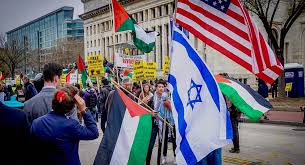
The language of good and evil can obscure how to judge the outbreak of war. Wait! Isn’t good and evil an essential component of judging? Not always, or even usually. Actually the bigger part of judgment isn’t praise or blame; it is discernment. And having to say something is good or evil from the outset can often impair what should be a prior step: that of discerning what is happening.
When a war begins, people often hear the same moral demand. You cannot remain neutral. You must choose a side. The statement sounds principled and urgent, and in moments of violence it can feel persuasive. Yet it is also misleading. Having lived in Saudi Arabia, and being exposed to both their value for increased wealth and their animosity to Israel, they are in a particular conundrum. Choosing the American-Israeli side goes against their historical animosity and exacerbating Iranian ire, by staying passive, they in effect look feckless in the face of Iranian aggression. Wars rarely present the world with a simple moral binary. Instead, each conflict asks observers a particular question about how the international order should work.
Understanding this simple idea explains why global reactions to wars often look inconsistent. Governments, commentators, and citizens appear to apply different moral standards depending on the conflict. Yet what often changes is not the morality of the observer, but the question the war itself places before the world.
Consider the major wars of the last two decades. Each one confronted the international community with a different moral dilemma.
The Iraq War in 2003 forced the world to confront the question of preventive war. The United States and its allies argued that Saddam Hussein’s regime might possess weapons of mass destruction and might eventually threaten global security. Their argument was not simply about Iraq. It was about whether it is legitimate to remove a potential threat before that threat becomes fully realized.
Supporters of the invasion believed that waiting could be catastrophic. If a dangerous regime acquired powerful weapons, the cost of inaction might be far greater than the cost of acting early. Critics answered a different moral question. They argued that preventive war undermines international law. If states can invade others based on suspected future threats, then almost any war could be justified. For them, the danger was not only Saddam Hussein but the precedent such a war would establish. The argument over Iraq was therefore not merely geopolitical. It was philosophical. It asked whether fear of future danger can justify present violence.
Nearly two decades later the Russian invasion of Ukraine presented a different moral challenge. The central issue was territorial aggression. A recognized international border had been crossed by military force. The question confronting the world was whether territorial conquest would once again become a normal instrument of state power.
This issue resonated strongly because the modern international system was built in part to prevent precisely that scenario. After the catastrophes of the twentieth century, the idea that borders should not be changed through conquest became one of the foundational norms of global politics. When Russia invaded Ukraine, many countries saw the conflict not simply as a regional struggle but as a test of that principle. If territorial conquest becomes acceptable again, every border dispute in the world becomes more dangerous. The debate therefore centered on a tension between resisting aggression and avoiding escalation into a larger war.
The war between Israel and Hamas that began in October 2023 generated yet another kind of moral debate. At first the moral question appeared straightforward from a certain perspective. Does a state have the right to destroy a militant organization that has attacked its citizens? Most governments agreed that the answer was yes. Self-defense is a widely accepted principle in international law.
As the war continued, however, the debate shifted – especially in the West. Images of widespread destruction and civilian suffering forced the world to consider a second question. Even when a country is responding to violence, what limits should govern the use of force? Humanitarian law exists precisely because warfare often unfolds in densely populated areas where civilians are vulnerable. The Israel–Hamas conflict therefore evolved into a debate between two powerful narratives: one centered on security and self-defense, the other on humanitarian restraint and civilian protection.
Tensions involving Iran and the United States and Israel raise yet another type of moral dilemma. The issue is less about territory and more about legitimacy and power. Supporters of strong action against Iran emphasize the dangers posed by the Iranian regime, including its nuclear ambitions and its network of allied militant groups throughout the Middle East. In this framing, the moral question becomes whether the international community should constrain a dangerous regime before it becomes more powerful.
Iran and many of its supporters frame the question differently. They emphasize sovereignty and the history of foreign intervention in the region. Their argument asks whether powerful states have the right to weaken or reshape governments they oppose through military pressure or regime-change strategies. The same conflict therefore appears very different depending on which principle one believes is most important: containing threats or defending sovereignty.
Recognizing that wars ask different moral questions helps explain why reactions across the world appear inconsistent. People sometimes accuse governments or commentators of hypocrisy. Why oppose the Iraq War but support Ukraine? Why defend Israel’s right to self-defense but criticize aspects of its conduct in Gaza? Why oppose military confrontation with Iran while still criticizing the Iranian regime?
These positions can seem contradictory if we assume that every war presents the same ethical dilemma. In reality, each conflict highlights different principles. Some wars revolve around preventive security. Others revolve around territorial aggression. Others force the world to consider humanitarian limits. Still others raise questions about sovereignty and intervention.
Once we recognize this pattern, global debates about war become easier to understand. Observers are not always applying double standards. They are often answering different moral questions. One person might oppose preventive war because it undermines international law while simultaneously supporting resistance to territorial conquest because borders must be protected. Another might defend the right of self-defense while still believing that humanitarian limits must constrain military action.
The language of choosing sides can therefore obscure more than it reveals. It simplifies complex ethical dilemmas into binary choices. In reality, international conflicts force societies to weigh multiple principles that sometimes collide with one another.
Security, sovereignty, human rights, territorial integrity, and humanitarian law are all essential values. Yet in moments of crisis they do not always point in the same direction. Wars expose the tensions between these principles and force the world to decide which one should take priority in a particular situation. Understanding the moral question behind a war does not eliminate disagreement. But it helps clarify why disagreement occurs. Before anyone can choose a side in a conflict, they must first decide which ethical problem the conflict represents. And in global politics, that question is rarely as simple as it first appears.

 Raymond Klassen - Ideals and Identities
Leave a comment