
The factual events unfolding in Gaza are happening at a rate that no individual can keep up with. Just today, Israeli Prime Minister Benjamin Netanyahu gave two interviews with CNN and NBC this morning while I was drafting the following article. We shouldn’t be surprised to see his effort in narrating a story intended for Americans to believe. After all, the way it currently stands, America provides essential material support to Israel’s operations in both Gaza and the West Bank. I intend to show that these interviews are examples of what Hannah Arendt called “organized lying,” and that this is an essential tool for totalitarian regimes. In this regard, I invite you to exercise judgment about three vitally important issues: 1) to consider whether Israel is indeed such a regime, 2) to consider whether factuality and falsehood is indeed a crucial category by which we understand the world, and 3) whether Western media organizations have, at least partially, failed the task of telling the truth.
Those may seem to be weighty considerations, political and philosophical as they are. However, if we, as observers, we want to know what is really happening in Palestine and Israel, we are reliant on news organizations to be our eyes and ears: they must testify to things they have witnessed with their eyes and ears. They are to testify to factual reality. Only they have the resources to cover such events at the scope and scale at which they are happening. But what we are becoming quite clear about in the ground operation of IDF (Israeli Defense Forces) in Gaza, the facts have a kind of fragility that we don’t expect. You see, in historical truth telling, universities, museums, and archives play a key role in keeping the records of factual truth. But journalists and journalistic organizations are tasked with providing these facts as they actually happen. However, if we are paying attention, (and, as observers, we want to authentically claim this) we should have noticed the practice of organized lying.
Part 1: Fragile Facts
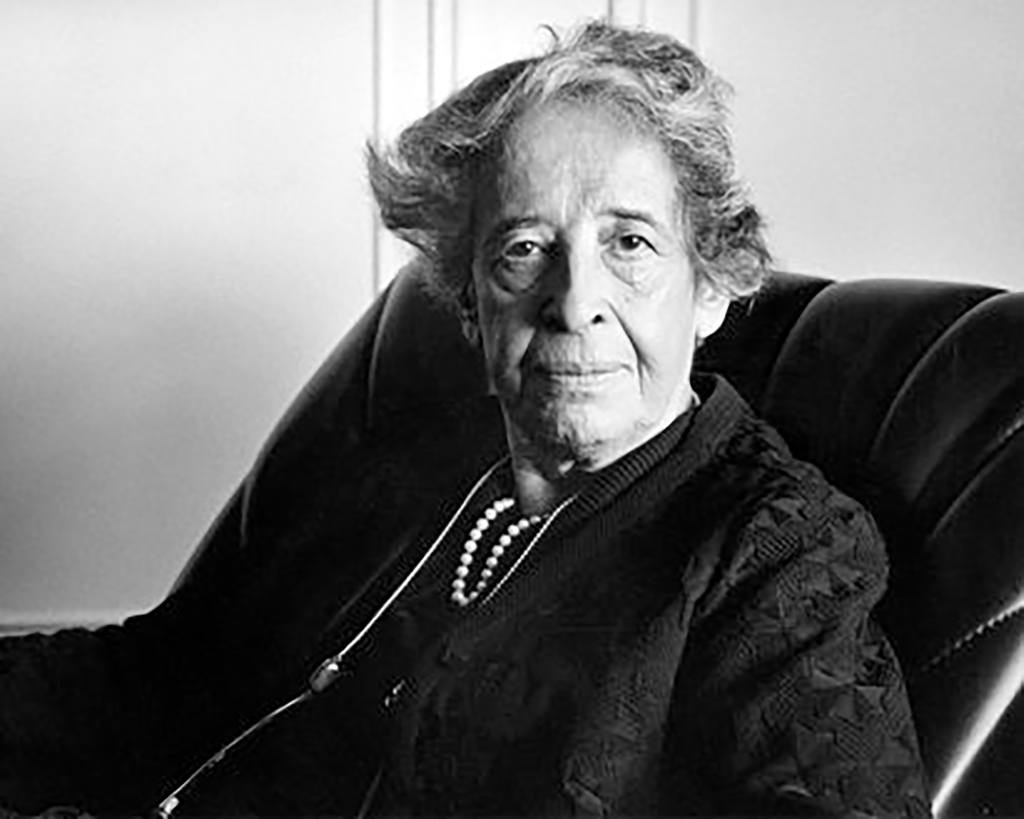
In order to frame this discussion, let’s look at Hannah Arendt’s essay, Truth and Politics (free download). In it, Arendt makes an extraordinary, counterintuitive claim: facts are fragile.
Early on in this essay, Arendt distinguishes between different kinds of truth. She notes mathematical truths, scientific truths, and philosophical truths. She differentiates all of those from factual truth. Factual truths are concerned with human events, i.e., things that happen in the world.
Her key claim early in this essay is that truth is, more or less, durable depending on what kind of truth we’re talking about. Mathematical truths, for example, are extraordinarily durable. The next comes scientific truths. After that, philosophical truths – of the sort that Plato or Aristotle arrived at – are perhaps less durable, but still more durable than factual truth.
So, what does this all mean? How are some truths more durable than others? Here’s a thought experiment. Let’s imagine for a minute that humanity was destroyed as were the dinosaurs. An enormous meteor crashed into earth, or a climate change event happened, wiping out all human life. Now let’s project millions of years into the future. Some new species has emerged on Earth approximately like human beings. Arendt’s claim is that even though all human life has been wiped out, and even if all records of our existence have been lost, these new and habitants of Earth could still discover the triangle. They could still discover the Pythagorean theorem. Maybe they’d call a square or something other than a square, but a square would still have the same properties. 2 plus 2 would still equal 4. That’s what gives mathematics its durability. If, for example, we refused to teach a generation of people mathematics, they could still through their own study work out the principles of mathematics themselves. The same is more or less true of science. Scientific principles might be a little more complex, might require a bit more imagination, but Arendt argues that the theories of Einstein or Stephen Hawking, for example, could still eventually be worked out by people even if they had no record of our working them out. She goes further and says the same is true of philosophy. The deep questions and arguments worked out by people like Plato or Kant would still be there waiting for a new species of people or a new generation of people. This is critically important.
The same is not true of historical facts, according to Arendt. Historical facts are events that happen in the human world. These have a kind of existence that’s much more fragile. It will be much more difficult, and perhaps impossible, for some new species of beings or for a new generation of people to recover things that happened from the past. If there’s no record of those things happening that kind of knowledge cannot be reproduced without a record.
This has enormous political consequences because it’s not really the meteor (or in the case of Israel, a climate change event) we need to worry about. Instead, it’s political power since facts can be extraordinarily inconvenient to political power or those in political power. Those in power often have an interest in either concealing or even destroying certain facts.
Arendt writes: “The chances of factual truth surviving the onslaught of power are very slim indeed. It is always in danger of being maneuvered out of the world, not only for a time, but potentially forever. Facts and events are infinitely more fragile things than axioms, discoveries, theories, even the most wildly speculative ones produced by the human mind. They occur in the field of the ever-changing affairs of men. Once they are lost, no rational effort will ever bring them back. Perhaps the chances Euclidian mathematics, or Einstein’s theory of relativity, let alone Plato’s philosophy, would have been reproduced in time if their authors had been prevented from handing them down to posterity are not very good either. Yet they are infinitely better than the chances that a fact of importance, forgotten or more likely, lied away will one day be rediscovered.”
The real threat to facts, Arendt believes is something she calls organized lying, which are coordinated and concerted efforts to undermine the factual character of human events. Facts, Arendt asserts, are a kind of check on the operation of power. Well, we can argue about the meanings of facts or their relative importance; we can debate which facts we ought to take more seriously than other facts. All of this is normal within the realm of human affairs. But what we can’t do, what we can’t allow, according to Arendt, is to allow people in power to dispute the existence of facts altogether.
All of this speaks to the enormous importance of public institutions like newspapers, libraries, museums, archives, and let’s not forget universities, i.e. places where facts are stored. These are institutions that maintain the public record. They maintain the factual account of reality. Arendt argues that the agenda of certain streams of political power is to lie factuality out of existence.
The Purpose of Organized Lying
The purpose of constant lying, says Arendt, is not to replace the truth with the lie. The purpose of constant lying is to undermine the character of factuality itself. She says the agenda of organised lying within politics is to make facts seem like matters of opinion. And when facts turn into opinion then there is no factual account of reality. There is no agreed-upon basis for human action. Political decisions become meaningless and impossible. And once that happens, Arendt says, reality becomes extraordinarily malleable. It can be shaped and reshaped according to the whims of whoever has power.
The factlessness of reality is a totalitarian ambition: to render the world into something that can be reshaped into whatever power wants it to be. Arendt says, “In other words, the result of a consistent and total substitution of lies for factual truth is not that the lies will not be accepted as truth, and the truth be defamed as lies. Instead, the goal is that the sense by which we take our bearings in the real world – and the category of truth versus falsehood which is among the mental means to this end – is being destroyed.” It is critical to remember that Arendt, who was a German Jew, and fled Europe during the Second World War for America, understands totalitarianism to be the great threat to human life.
One of the reasons totalitarianism is so dangerous is that it threatens our factual account of human events. There are different ways we might define a totalitarian regime. They typically have dictatorial or authoritarian leaders. They often use nationalist or racist rhetoric, myths of national, and racist superiority. Importantly, while totalitarianism is often identified with the far right, Arendt believes that it can emerge on the right or the left of the political spectrum. Totalitarian systems can be both fascist and communist, for example.
For Arendt, one of the defining features of totalitarianism is the political opposition to facts. Totalitarian leaders and regimes treat facts like enemies. We need to be especially watchful for this because if governments are not required to respect facts, they become radically free. They have the capacity to say things and then claim they never said them. They can rewrite history to serve their interests. They become free to categorize specific people or groups as criminals or threats all without evidence. Historically, these people or groups tend to be minority groups, but it could also be political opponents, i.e. anyone who opposes the regime or those in power. And that’s why we need to speak up for facts.
In Israel and Palestine today, it is predictable that Netanyahu is in the media disputing the facts, or even factuality, for political gain. What is surprising is the American complicity in that act itself.
American Complicity in Organized Lying
I do not know whether it has been malicious or not, but American news outlets have been complicit in the organized lying of the Netanyahu government.
As Israel’s ground invasion enters a dangerous new phase, we need to focus on the one country with the power to stop the carnage in Gaza, the United States. Approximately 11,000 Palestinians have been killed. The UN Secretary General has called the war zone “a children’s graveyard.” The living find themselves trapped among decaying bodies in the debris. American officials continue to stand by Israel in public when the cameras are gone, they’re counseling restraint, or so they say.
The 4-hour humanitarian pauses that Israel put into effect on Friday are what passes for progress. That still leaves another 20 hours day for the Israeli military to bomb civilians fleeing their homes.
Across American news networks, the argument that Israel’s mass slaughter of civilians is a justifiable act of self-defence often goes unchallenged. And there has been far too little discussion of a ceasefire. Some US media outlets, though, have produced powerful accounts of this asymmetrical war. But there is an unmistakable, undeniable chill with too many voices silenced. Criticism of Israel can keep you off the American airwaves, out of print, or even cost you your job.
The United States is the armor of Israel. United States is the diplomatic protector. That’s why the discussion here matters a great deal. You can imagine the impact when US senator Lindsey Graham said on Fox News, “We’re in a religious war here. I am with Israel. Do whatever the hell you have to do to defend yourself. Level the place.”
There are 2 conversations happening. There’s a popular conversation amongst people receiving their information directly from the ground; there is a completely different conversation and amongst those who are consuming their information from more popular sources of media. MSNBC reported, “Gaza is not now under siege. Israel has been under siege for 75 years.“ Jake Tapper, from CNN, opined, “Israel sees the parades and the rallies for the ceasefire, and they see no parades and no rallies for the return of the hostages or the removal of Hamas.”
To understand how biased American media coverage of the war in Gaza can be, just turn on the television. You can see it in what is condemned and what is condoned. Who is dehumanized? Who is not? You can see it in what is questioned and to what extent.
American newspapers, journalists, and cable news networks are not pushing American officials enough. They’re not asking them to condemn the Israeli Prime Minister talking about genocidal biblical verses to justify their military campaign. Lindsey Graham, without any pushback from Fox News was allowed to declare, “The goal is to destroy Hamas. Hamas is creating these casualties, not Israel.”
I have not observed a single editorial board in the United States that has actually called for a ceasefire in spite of the carnage. Ironically, some Israeli press take stronger and bolder stances as opposed to US newspaper editorial boards that have more or less fallen in line with what the State Department’s party line is. You have seen American politicians like Marco Rubio or Nikki Haley using genocidal language about Gaza. “And I’ll say this to Prime Minister Netanyahu. Finish them.” (Nikki Haley) Marco Rubio said, “I don’t think there’s any way Israel can be expected to coexist, Or find some diplomatic off ramp with these savages.” And neither of those comments were treated with the kind of shock they deserved to be treated with.
Americans were among those horrified by the gruesome images they saw on October 7th after the Hamas attack that killed more than 1,200 Israelis. Since then, too many in the US media have been taking their cues from the Biden administration’s insistence that what Israel is doing – the killing of more than 11,000 Palestinians somehow remains an act of self-defence.
CBS reported that “almost every military analyst has said that a ceasefire could give Hamas an opportunity to regroup and carry out future attacks.”
More than two-thirds of Americans now want a ceasefire. It is a growing movement that is insufficiently reflected in the mainstream media commentary which often draws the line well short of that. CNN, as so many others have echoed, has asked, “What about the Israeli officials that I’ve talked to about these calls for a ceasefire? They say that just gives Hamas time to regroup. They say that just gives Hamas time to recruit.”
Interviewees tend to repeat the Israeli media’s talking points on Hamas, hospitals and human shields. Hillary Clinton, in her interview on the View said, “The storing of munitions, all kinds of explosives, are under hospitals, under refugee camps, under civilian targets, the use of civilians as really just tools of war by Hamas.” Those are claims that Israel has made many times before but have never been verified.
Who gets to be heard?
The Arab and Middle Eastern Journalists’ Association says, “it is deeply troubled by reports the journalists of Middle Eastern descent are being sidelined from reporting or commenting on the current war… while suggestions for nuance and precise language in reporting are being ignored in newsrooms.”
According to Abdallah Fayyad, formerly of the Boston Globe, “There’s not necessarily, you know, this red line that editors have that, you know, you’re not allowed to say this, or you’re not allowed to say that. There is a culture of fear. In our institutions here about talking honestly and freely about this because whenever something that sheds light on human rights violations committed by Israel, then there’s usually a massive pushback campaign and people are afraid of it.”
Alex Kane, a senior reporter of Jewish Currents, says, “The newspapers like the New York Times and Washington Post have done an admirable job reporting on what’s going on in Gaza. I’ve seen plenty of stories of the coverage of civilian harm in Gaza. Cable television by contrast, because of the sort of nature of table TV, [offers] short segments, kind of favoring sound bites. This sort of analysis you’re getting there is just truncated and often misinformed.”
When taking in the coverage of Gaza or even scrolling through their social media, readers should consider who they are not hearing from: voices that have been silenced, journalists who have been fired over the positions they have taken online. They include a New York Times magazine writer who signed a joint letter opposing the Israel-Gaza War was questioned by her editor about that and ended up resigning. After the editor of Harper’s Bazaar Magazine tweeted that Israel’s cutting off power to Gaza was inhuman, the magazine’s parent company, Hearst banned its employees from expressing personal political opinions on social media.
This goes beyond news outlets. Into the art world. The New York-based magazine Art Forum fired its editor-in-chief after he signed a petition calling for a ceasefire one that neglected to condemn Hamas attack on October 7th.
Noura Errakat, an associate professor at Rutgers University, told Al Jazeera English’s The Listening Post, “It seems like the top executives of these corporate media outlets are actually in a pitch battle with the producers who want to tell a different story. I have been blacklisted by several outlets as I’ve been told by producers. My clips have also been censored and even though they’ve aired live have not been posted on their websites. The explanations for it but that I either made the anchor look bad or that they were too evocative. None of the reasons provided have to do with ‘I said something that wasn’t true, or I was an inflammatory in any way.’ It was literally other reasons – in order to craft a particular kind of story where we can express empathy for Palestinian lives, but not point the finger about why they are being killed in a genocidal campaign and who is doing it?”
Jack Mirkinson, acting senior editor of The Nation, analyzes, “To express support for Palestine brings many different risks. It risks you being ostracized within the broader media world. It risks you not getting career opportunities. It risks you being on the front page of a tabloid newspaper, and you know, and labeled a terrorist sympathizer. And that is reflected in both the coverage from the last month and also the broader climate of repression that we have seen in so many different areas of public life.”
After almost a month of locking the international media out of the war zone and then disputing the reporting of Palestinians inside Gaza, Israel finally allowed some Western journalists to enter this past week under certain conditions. The reporters must be embedded with Israeli forces that act as their protectors and ultimately their editors. “As a condition to enter Gaza under IDF escort the outlets must submit all materials and footage to the Israeli military for review prior to publication,” according to CNN’s Fareed Zakaria.
CNN and others are at least telling their audiences that their information is filtered by the Israeli state. CNN has agreed to these terms “in order to provide you the viewers a limited window into Israel’s operations.”
However, they could have done more to push back against the conditions that first, that they had to be embedded with the Israeli military and that second, none of their coverage would the Israeli military and that second none of their coverage would be published without the approval of the state. And that second none of their coverage would be published without the approval of the state. So, of their coverage would be published without the approval of the state. Literally all that’s filtering out the approval of the state. So literally all that’s filtering out is state propaganda.
It is the responsibility upon audiences to critically assess why Israel is preventing a foreign press from entering. Is it for a “rare look”? It’s only rare if you are overlooking all of the journalism from inside Gaza that are going towards the violence – not away from it – through unbearable conditions to actually bring the world these stories.
Around 3 dozen journalists inside Gaza have been killed reporting through unimaginable personal emotional trauma. They have lost their families and. To erase all of that is very, very shameful – and it amounts to erasing facts, and factuality, out of existence.
That is not to dismiss some quality American news coverage of this war and its impact on Palestinian civilians. Anderson Cooper’s CNN interview with an American nurse who worked in Gaza will stick with viewers. The nurse recounted, “There were children with burns down their faces and all down their neck, all over their limbs. Because the hospitals are so overwhelmed, they are being discharged immediately after.”
Still, US news output is pulling its punches on the scale of the killing: the mass displacement, the crimes against humanity. In examining this war, perhaps Americans need to reflect on some of their own colonial history to remember that all colonizers, including Americans, started out by occupying the land of the other.
The fact that for most Americans they cannot critically examine Israel also represents their own blind spots of understanding themselves as living within a settler-racial colony, as benefiting from white supremacy on land that are still colonized and not ceded by over 500 indigenous nations. Everything that we can critique Americans for failing to see in the humanity of Palestinians reflects their own inability to see themselves. So, Palestine is not an exception. The rule is a colonial framework that North American settlers, under the guise of liberalism, have deluded themselves with; we’ve somehow overcome colonialism, which is not true. We continue to exist in an enduring colonial reality.
The vast majority of mainstream news outlets in the US are corporately owned. Elsewhere in the English language media landscape, publicly funded broadcasters are taking heat over their coverage of the Gaza story. Rami Ruheim, the BBC’s (UK) correspondent in Beirut, sent an email to Director General Tim Davy expressing his concerns. He argued that “historical context and significant information, including expert opinion, that Israel’s actions could amount to genocide was either entirely missing or not being given due prominence.” When Davy failed to reply to that email, Ruheim shared with the rest of his colleagues at the BBC. In Canada, a lawyer journalist had similar things to say about CBC’s coverage. He interrupted a speech the Network CEO Catherine Tait was giving, declaring, “You are not telling the truth as an organization about the genocide happening in Gaza…” In Australia, more than 200 employees at ABC met to point out issues again over terminology and the networks reliance on Israeli militaries talking points. They also called out ABC’s refusal to use certain terms, such as “occupation,” “apartheid,” and “genocide,” and e
The UK’s Channel 4 Secunder Kermani was embedded with the Israeli military in Gaza when they came across Palestinians fleeing the bombardment and was not allowed by the military to go any closer. Israeli soldiers can prevent journalists embedded with them from interviewing guards and refugees. What they cannot do is stop those news organizations from working with Palestinian reporters to tell that side of the story. Showcasing the scale of this tragedy is something Channel 4 has been very effective in doing.
Remaining Questions
At the beginning of this article, you were implored to consider three questions:
- Is Israel a totalitarian regime?
- Is factuality and falsehood indeed a crucial category by which we understand the world? AND
- Have Western media organizations, at least partially, failed the task of telling the truth?
I do not want to dictate your answers here. But they are indeed worth considering. In Palestine and Israel, we can indeed see how these three questions are interrelated. Our answers to them are crucial – and the judgments we make about them are likely indicative of our general complicity in ongoing atrocities – at least as observers.
Perhaps we can keep these questions in our mind when we listen to the CNN and NBC interviews with Netanyahu earlier on November 12.
In both interviews, do we buy the narratives that he asks us to believe: Oct. 7 = 20 9/11’s? Ten thousand rockets are falling on our cities all the time. Do you believe it? These killers are embedded in hospitals, schools, and UN facilities. Do you believe it? Hamas is the only ones taking children hostages? Hamas are savages? Palestinians are barbarians? The denial that Israel armed 10,000+ civilians in the West Bank to be part of a civilian militia?
The only thing I will say, in conclusion, is that I am appalled that the US media consistently gives voice to this, what could be called, propaganda. Instead they also need to listen to the voices on the ground – to the Palestinians who have no choice but to run towards the violence.
Further reading on Palestine and the Al Aqsa Flood: Day 1, Day 2, Day 3 part 1, Day 3 part 2, Inadequate Political and Moral Categories Part 1, Inadequate Political and Moral Categories Part 2, On the term: “Terrorist”, Palestinians Returning to Northern Gaza, A prayer for Israel and Palestine


 Raymond Klassen - Ideals and Identities
Leave a comment