
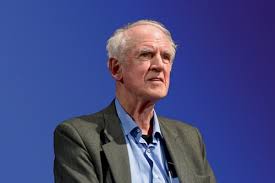
To say that Canadian philosopher Charles Taylor has had an impact on the way people in “the West” think about themselves and the world would be a vulgar understatement. First, any dialogue we may have about the self and the demand to be authentic bears the mark of Taylor’s influence. Second (and third), our understandings of a Western democratic secular social order are now open to Taylor’s dual insights: a) that belief in the God of Abraham is only one option among many, and b) that experiencing a higher spiritual order happens in “the every day,” and no longer requires monastic renunciation and asceticism. Further, it would be remiss if we did not also mention the impact of Taylor’s articulation of the expressive functions of language in constituting the world, leading to core principles in cross-cultural understanding, we need interpretation to learn; in other words, language is essentially constitutive of the human relationship with the world, and human relationships with each other. Objective description is never a possibility, even in the natural sciences and interpretation is central to living in the world. He has impacted our understanding of freedom, democracy, the roles of science and language, and the religious experience. The breadth of his work and the ways it has become part and parcel of our self-understanding and imagination is nothing short of astonishing.
I could list the number of people who praise the work of Charles Taylor, and this may raise his esteem in the reader’s eyes. Yet, I write this not to elevate Taylor’s esteem; from my scant attendance at his lectures and my limited interaction with his vast work, Taylor himself would recoil from preferential esteem. Instead, what I hope you gain from reading this article is how Taylor helps articulate central themes of ways we imagine our lives as human agents. What you might also do is draw upon the frameworks and vocabulary that Taylor offers to make sense of our chaotic times. I believe, like Taylor originally said of the German philosopher G.W.F. Hegel, that Taylor himself, not only provides a language and framework that can articulate the deep senses of meaning we long for, but it also identifies many of the forces that are at work in our lives.
Note: At the end of this article you will find references to key works of Taylor – with some free links to the materials.
The Self
A lot of criticisms are leveled at modern Western individualism. Taylor acknowledges that it can seem narrow, shallow, and too focused on instrumental self-interest. Still, he refuses simple negativity. The modern idea of self brought new richness and freedoms to human life. It is not only built on foundations like St. Augustine’s articulation of a sense of interior space and the importance of memory. It also added distinctive dimensions that opened it to embrace equality in ways ancient thought had not. That we struggle for meaning and purpose in our lives is an indication of the potential opened for us.
Taylor’s “Sources of the Self” traces the development of this modern understanding of what it means to be a person and explores its positive contributions and possibilities as well as its limits and potential weaknesses. The story proceeds in several phases. The era of the Protestant Reformation (and the Catholic response, which was never simply resistance) played an important role. So did the Enlightenment celebration of reason, which applied to self-knowledge and linked to the idea of self-mastery.
Importantly, Taylor places a special emphasis on Jean-Jacques Rousseau and the Romantics. These built on earlier traditions like romantic love and integrated emotions and aesthetics into their accounts of the human self and embraced nature in new, positive ways. Rousseau helped make the notion of living in accord with nature into an ideal (in place of mastering nature and escaping from “baser” instincts or fallen character). Johann Gottfried Herder argued that human nature is not a determining force but a range of possibilities and capacities demanding expression. So basic is the notion of self-expression that we can hardly think of the self without it. This transformed the Christian idea of vocation or calling and underpinned a new idea of equality based on the recognition of difference.
Language is essential for this expression, along with art, religion, action, and ethical relationships. Humanity expressed itself differently in different cultures and even person by person. Such diversity is undetermined by a fixed human nature; rather, it is available via the natural capacities of human beings. Working out its implications is a basic task for human beings, both at the level of cultural differences and in individual life. So is reconciling what might be called the Enlightenment and Romantic sides of the modern self: the pursuit of self-knowledge and self-mastery and distinctive self-expression and authenticity.
“Sources” is an intellectual history, but with a broader intent. All of Taylor’s major books embed arguments in histories because he wants to show human beings as a process of becoming, not simply determined by nature. We face both new circumstances and recurrent dilemmas, enriched by a growing range of intellectual and moral resources. Through tracing how modern thinking about the self has developed, Taylor demonstrates how powerfully ideas can shape our lives and that there are always multiple possibilities for their utilization.
For example, individualism and a focus on the self became associated with secularism. However, the focus on the individual self was advanced by 17th-century religious thinkers as part of a more personal relationship with God, manifested in individual prayer and supported by autonomous interpretation of the Bible. Religious devotion both influenced the development of the modern self and was transformed by it.
Likewise, individualism is often linked with greed and self-interest. Homo economicus is a modern conception. Relatedly, a prominent line of development in the modern self cast it as “punctual” as though each of us is a finite and bounded unit and like the points of geometry, a member of various sets like nations or humanity as a whole. Taylor doesn’t deny this but shows that among the sources of the modern self was also a moral revolution in which “ordinary happiness” in this material world was given a positive value not simply opposed to otherworldly spiritualism. This was linked to recognizing lay professions as comparably important to the priesthood, valuing the family more, and with it, recognizing and extending childhood as a stage of human development. Neither families nor professions are simply sets of altogether discrete individuals. So we have also resources for recovering more relational, socially embedded understandings of the self.
As part of telling this story, Taylor offers important lessons on how ideas change, emphasizing how seldom they simply move from right to wrong but rather tend to resolve certain weaknesses, as well as introduce other potential issues. This can result in overall movement from worse to better, but there are always different possible paths as the meaning of ideas evolves and escapes their originators’ intentions. We face choices. We can limit individualism to notions of self-interest and necessity, but we don’t have to. After all, it also shaped development of the notion of human rights. How we judge this or other ideas will reflect our “horizons of evaluation” including both what we think is possible and what we think is good. Our strongest commitments put other preferences into perspective.
Authenticity and Recognition
No other major theme in Taylor’s work has inspired me than his emphasis on authenticity and recognition, and specifically how these two concepts are integrally related. The theme of what it means to be a person, a human being, runs through Taylor’s life’s work. It is enormously important in an era of great transformations. Definitions of the human and the self are challenged today by technological innovations from artificial intelligence to gene editing. They are also important in determining what ethics and policies should guide those new technologies. And not least, we live in a world where projects of personal identity are as influential as economic self-interest or old ideologies in shaping politics. This is true in “progressive” forms like the transformation of gender and sexual identities and claims to equal rights. Additionally, it is true in “conservative” forms like the claims to national and communal identities defended today by populist movements. It is also true in more centrist ideas of the society’s role in forming individual character.
Taylor has been one of the most influential shapers of our understanding of such “politics of identity.” These reflect, he argued, a human need for recognition. We don’t simply exist and have identities, each sufficient in ourselves. We develop identities in social contexts, and we seek recognition of the legitimacy of our identities from others. As Taylor wrote in 1994,
“We define our identity always in dialogue with, sometimes in struggle against, the things our significant others want to see in us. Even after we outgrow some of these others ― our parents, for instance ―and they disappear from our lives, the conversation with them continues within us as long as we live.”
This makes questions of identity personally significant and the refusals of acceptance and respect deeply challenging. This extends to identities that can also be politically mobilized such as nationality, race, ethnicity, gender, or sexuality.
“Due recognition is not just a courtesy we owe people. It is a vital human need. To treat people with dignity and respect, we need to take full account of their varied social situations. This is especially important vis-a-vis those whose identities have been systematically degraded and whose rights to be treated as equals have been neglected.”
The politics of identity and recognition are reinforced by another central theme in modern culture: the value of “authenticity.” A strong horizon of evaluation for many moderns is to be “true to themselves.” This is linked to imaging ― we each have an inner essence, recasting the older idea of an individual soul. People often think of this as their “nature,” and it can be problematic when it encourages people to regard relationships as disposable or to imagine that being true to themselves demands being inflexible. But for Taylor, these are debased versions of an idea with much positive ethical potential. Our deepest selves are constituted by our strongest values and commitments and are shaped by the most significant relationships of our lives. We can approach authenticity as an orienting ideal, aware both that we don’t always fully understand our own deepest commitments and that we often fail to live up to them. Moreover, recognizing that everyone has a unique way of being human facilitates respect for individuals, but also for different cultures.
The effort to be authentic gives modern people a propensity to be “seekers.” The idea of trying to “find yourself” wouldn’t have made as much sense in many other eras. It is closely related to freedom from restrictions and the material availability of options, for example, in the choice of occupations, politics, or social movements. Taylor uses the term “seekers” to describe the plethora of people who describe themselves as religious or spiritual but not committed to any one organized religion. This suggests something of an ambivalence with which he thinks moderns live, which can be troubling but is also ethically liberating and often creative. We often seek identification with existing communities and cultures, but we also, to an unprecedented degree, think of ourselves as choosing among them. And we change them. What happened to the “politics of identity” reflects this. Early usage often suggested that identities were malleable, and there was fluidity in how they should be valued, inhabited, and combined. But often, the politics of identity became a more rigid demand for respect for supposedly fixed and essential identities.
Quebec is never far from Taylor’s mind when he thinks of the politics of identity and recognition. He grew up with a Francophone mother and an Anglophone father. From early in life, he was committed to a multicultural vision for the province and Canada, convinced that instead of being “two solitudes,” Canada’s major linguistic and cultural communities could enrich each other. When he was named to Oxford’s prestigious Chichele professorship in 1975, he decided he would only stay five years, at least partly because he wanted to return to Montreal and make sure his daughters had the chance to grow up bilingual. He helped to articulate the rationale for Quebec’s special status in Canada. But he also campaigned to keep Quebec part of Canada, arguing that with proper care and mutual respect, pluralist societies could be richer and stronger than those seeking fundamental conformity.
Taylor extends this point more generally. To be true to yourself need not mean either standing apart or trying to share a singular identity only with others just like you. It ought to mean recognizing diverse interests and commitments in yourself, being open to a sense of possibility, and being guided by strong (though correctable) convictions. One of Taylor’s most important points is that we don’t just “have” selves. We have the potential to be better selves. We usually also have the desire to be better selves.
Language and the Human Sciences
Like almost every other path of engagement with Taylor’s work, the politics of recognition and the ethics of authenticity bring us back to what it means to be human. Language is core to that. Taylor isn’t interested simply in distinguishing humans from other animals by the capacity for language (and of course, we know, as 17th and 18th-century thinkers didn’t, the extent to which other animals are capable of language). Taylor’s concerns, rather, are the extent to which language makes us who we are, the fact that we have language only by sharing it, and that we use language expressively, not just instrumentally.
For Taylor, language is constitutive of human beings; we are language animals. Taylor expands on the Sapir–Whorf hypothesis, showing how basic language and culture are to how we know other human beings and, indeed, the material world. This is one reason why cross-cultural understanding requires mutual learning, not just translation. It is also among the reasons why interpretation is basic to the human sciences.
Important currents in behavioral and social science have been driven by a desire to achieve “objectivity” by disengaging from interpretation. Of course, knowledge of humans includes many “objective” elements from physiology to demography. But it cannot be complete ― or wise ― on these bases alone. Humans are not altogether objective and transparent even to themselves. Take voting. One may objectively observe people raising hands or shouting “aye” and “nay” in a meeting, but one can’t make sense of this as voting without knowing more about a linguistically constituted practice and the background of a culture in which it is pervasive. Within that culture, researchers can take the background for granted, but the need for interpretation becomes evident as soon as they step outside that basis for consensus interpretations. Cultures vary and no analyst’s knowledge escapes culture. Like other human practices, moreover, voting often expresses meanings that go beyond manifest, instrumental decisions.
Language enables us to reflect, plan, and engage in agency, not only reactive behavior. This was a key point in Taylor’s first major work, where he showed why deterministic explanations of behavior (like B.F. Skinner’s behaviorism) must be inadequate to human action. Speaking is an example. It draws on a background resource ― language ― available to us only because we are not completely discrete individuals. But speaking is an action or more precisely, a practice.
Taylor illustrates this point by building on Wittgenstein’s famous account of following a rule. To follow a rule depends not just on knowing the rule itself in some objective sense (as a matter of premises and propositions, to use technical philosophical terms). It depends also on a tacit background of knowledge that is never rendered entirely explicit. To use Wittgenstein’s term, rules and the capacity to follow them are embedded in “forms of life” ― or, loosely, cultures. But here, it is crucial to understand cultures as something more than themselves catalogs of rules or formal structures. Starting with language, they are webs of meaning that people do not merely decode but inhabit and enact. One does not speak French by merely mastering the rules of French grammar (and of course, few Frenchmen can state those rules in much detail). To speak French is a practice, and competency is achieved by habituation and internalization, i.e., by making it part of oneself. Likewise, to follow a rule is a practice that both depends on culture and expresses it ― whether it is as seemingly simple as traffic rules or as complex as the injunction to treat other human beings as ends rather than means.
This argument is pitched against narrow Cartesianism, with its starting point of a solipsistic “I think therefore I am,” and the whole related project of epistemology as a matter of abstract reason. Taylor elaborates it now partly because advances in computational technology have encouraged the spread of new mechanistic, entirely instrumental explanations of human thought and action. These reflect what Taylor (following Heidegger) calls an “enframing” approach – treating language simply as a tool for communication and as external to the reality it names or describes. Such views encourage reductionism toward human beings as well as language.
Social Imaginaries and a Secular Age
An enframing perspective neglects both the constitutive role of language and the power of imagination in shaping human life. This enables us to reach beyond what is immediately evident to our senses. For example, we can form and act on aspirations for the future. Imagination, like language, also gives shape to the world. Much of “reality” exists in the way it does partly because of how it is imagined. This is not just a free-for-all of individual creativity; wishing does not make things so. But there are socially organized ways of imagining the world. Taylor describes several such “imaginaries” that help produce and reproduce the modern world: the idea of a generalized market is one of the most powerful; so is the idea of “the people” critical to democracy and legitimacy in other political systems. Business corporations and nations exist partially through the ways they are imagined.
Imagining modernity as a secular age is equally fundamental. This commonly involves what Taylor calls a “subtraction story.” Religion used to be a bigger part of human life and culture, but in the modern era, there has been progressive disenchantment; fewer people declare themselves believers; religion has lost most of its public role; science replaces religion as the basis for authoritative knowledge. Taylor acknowledges these changes but insists they can’t be well understood simply as subtractions that don’t entail a transformation of culture more generally. Religion’s role changes as people reimagine what the world, human life, and knowledge are like. How moderns understand personhood, moral obligations, or the place of material well-being in a good life are all changed; religion is not simply subtracted from them.
One of the most dramatic changes is the rise of what Taylor calls “the immanent frame.” This is the notion that everything in the world is part of a natural order understandable without reference to anything outside itself and simply as a matter of causal relationships. This isn’t simply a truth modern people discovered; neither is it false. It is part of a secular social imaginary. It is one way of understanding and giving form to the world and human life. Within the immanent frame, ideas about transcendence are either errors or simply unnecessary to achieving empirically verifiable knowledge. This understanding of the world has proved enormously productive in the rise of modern science. It has been limiting in spiritual life. It has also shaped an approach to the environment as simply a matter of cost, effect, resources, and use ― at odds with a notion of more transcendent value.
Indeed, within this immanent frame, values themselves tend to be understood simply as more or less arbitrary subjective states of individuals. Nature doesn’t have a value ― we either value it, or we don’t. Similarly, we may value human life more or less, but as a matter of cause-and-effect relationships, human beings don’t have intrinsic value. We see quickly that the immanent frame thus shaped not only the successes of modern science but also some of its dangerous moments. These may have been deviations from a more moral scientific ethos that includes ideas like not doing harm but these moral ideas generally come from outside the immanent frame. Today, the immanent frame is also challenged by the notion that human beings are radically transforming what seemed to be an entirely natural order ― whether through climate change or gene editing.
These are among the reasons why the secular age wasn’t simply the end of history so far as religion and spiritual life were concerned. Many people feel a need for a more spiritual compass to organize their personal lives and navigate the great transformations of our era. Some turn to the renewal of older religions. Others become seekers exploring new forms of spiritual and moral engagement. There are so many, headed in so many different directions, that Taylor describes a “supernova.”
Once again, Taylor narrates an intellectual history in which there are gains, losses, and possibilities for recovering what at some points appeared as paths closed off. A secular perspective grew first among religious people, for most of whom it was part of a deepening and more explicit religious faith ― notably in the 16th and 17th centuries. As modern science and states offered more control over matters in the material world, religion was called on as a guide. But in time, more and more thinkers distinguished questions of value on which religion could offer guidance from questions of fact and explanation. Many had a sense that to face the great transformations of a new era, religious innovation was required. Those who made the innovations didn’t imagine that for others, they would become part of a path away from religion ― any more than creators of modern technologies imagined that living in a world that felt technologically overpowered would lead many to seek a renewed spirituality.
Religion, thus, isn’t simply a matter of holding different abstract intellectual commitments from others, believing in the factuality of different propositions. It is participating in a different way of imagining the world. This can include achievements of modernity and the cause-and-effect systems in which they are embedded but isn’t limited to that. Reaching beyond might be based on belief in a higher power like God. It might also be based on a commitment to a good higher-than-mere-instrumental human flourishing, like love (especially in the sense of agape). We have moved “from a society where belief in God is unchallenged and indeed, unproblematic, to one in which it is understood to be one option among others and frequently not the easiest to embrace.” But even if religion becomes in some sense harder, it doesn’t vanish and religious experience may even gain new dimensions.
Taylor’s monumental “A Secular Age” is perhaps the single most influential work ever published on the phenomena of secularity (as well as the ideology of secularism). Ranging from the poetic to the social scientific to the deeply philosophical, it mobilized Taylor’s astonishing historical learning to advance understanding of what it means to live in a modern world. It has rightly transformed discussions in fields from sociology to history, anthropology, and religious studies.
Charles Taylor’s approach to philosophy is always shaped by deep ethical commitments and public concerns. He addresses technical intellectual problems, but he is never interested in them only as technical problems. He writes accessibly. He travels widely, not simply to speak to audiences about arguments he regards as conclusively settled but to engage in discussions that are always potential occasions for intellectual advancement ― and he listens patiently to the most naive questions, treating each as though it might contain an important new idea. Taylor’s approach also brings philosophy into the full range of human sciences and brings the more empirical humanities and social science into philosophy. It must be so, he seems to suggest, if the study of philosophy is truly to pursue wisdom.
Concluding Remarks
As I mentioned, Taylor’s work has had a profound influence on me. It has helped me navigate the thorny relationship between the individual and the community. It has also helped me to articulate the deep need for recognition I didn’t know I had. It further has helped me clarify my increasingly arms-length relationship with institutional religion, and the imagination of a spirituality of the every day. But besides these personal benefits, it has been an important contribution to understanding the times we live in. Hopefully, this article has done an introductory justice for those people who want to understand the breadth of the work of Charles Taylor. Also, for those who are acquainted with some of the work of Charles Taylor, I hope this article ties some of his broad and diverse concerns into a manageable narrative to proceed further.
Primary Resources – Charles Taylor’s Writings That Influence Me
The Explanation of Behaviour (Oxford, Humanities Press, 1964)
Hegel and Modern Society (Cambridge: Cambridge University Press, 1979)
Sources of the Self: The Making of the Modern Identity (Cambridge: Harvard University Press, 1989). [Google Books]
The Malaise of Modernity (Concord, Ontario: Anansi, 1991). Republished as The Ethics of Authenticity (Cambridge: Harvard University Press, 1992) Free PDF
Multiculturalism and ‘The Politics of Recognition’, Amy Gutmann, ed. (Princeton: Princeton University Press, 1992) Free PDF
Reconciling the Solitudes (Montreal: McGill-Queen’s University Press, 1993)
[with Vitit Muntarbhorn] Roads to Democracy: Human Rights and Democratic Development in Thailand (Bangkok and Montreal: International Centre for Human Rights and Development, 1994)
Philosophical Arguments (Cambridge, Mass: Harvard University Press, 1995)
Varieties of Religion Today: William James Revisited (Cambridge, Mass: Harvard University Press, 2002)
Modern Social Imaginaries, Dilip Gaonkar, Jane Kramer, Benjamin Lee and Michael Warner, eds. (Durham, NC: Duke University Press, 2004) Google Books
A Secular Age. Cambridge: Belnap Press of Harvard University Press, 2007. Free PDF
The Language Animal: The Full Shape of the Human Linguistic Capacity. Cambridge, Massachusetts: The Belknap Press of Harvard University Press, 2016.
My other writings on, or informed by, Charles Taylor
The Commitments of Authentic People
Covenants and the Freedom to Act
The Moral Stakes in Being Authentic
The Malaise of Modernity in the 21st Century
Educated Agency in the University: From Mastery to Authenticity

 Raymond Klassen - Ideals and Identities
Leave a comment