
I come from a deeply tribal society, steeped in religiously and ethnically Anabaptist traditions and communities. I also have made my living teaching people from radically different cultures, both in Asia, and also in Canada. “Self and other” is an essential tension I live with consistently. I am even married to a non-Canadian (who is now in the process of gaining her Canadian citizenship).
One of the biggest differences is the way people from different cultures imagine their lives. For example, many of my Muslim students imagine that they live their life in relationship to Allah, The Ukrainians I have taught reference much of their life to the shared suffering they have experienced. The imagination of each of their life and loyalties have a kind of gravitational pull toward these powerful master narratives of their identity. This plurality can create both challenges and opportunities.
Charles Taylor, the renowned Canadian philosopher, has made significant contributions to the understanding of modern society, ethics, and politics. One of the central concepts in his thought is the idea of the social imaginary, a term he developed to explain how people in a society collectively imagine their social existence. This concept helps to explain the shared understanding that enables large-scale social cooperation and cultural coherence, despite the complexity and diversity of modern societies.
The social imaginary is different from a set of formal theories or philosophical systems: it is a more implicit, pre-theoretical understanding that shapes how people live, act, and relate to one another. The social imaginary relates to modernity, and is so vital for understanding the evolution of societies. I want to conclude with a comparison of two particular social imaginaries to show how useful such a concept can be.
Defining the Social Imaginary
To grasp Taylor’s notion of the social imaginary, it’s useful to contrast it with what we might call formal or theoretical accounts of society. These accounts, such as political theories or social contracts, are the results of philosophical or scholarly reflection. Intellectuals or elites often construct them to explain how society ought to function or how individuals relate to institutions and one another. We understand that Thomas Hobbes, John Locke, and Thomas Jefferson are important political theorists, and people like Rousseau laid out concepts of the social contract.
In contrast, the social imaginary refers to how ordinary people “imagine” their collective social life. Taylor defines it as “the ways people imagine their social existence, how they fit together with others, how things go on between them and their fellows, the expectations that are normally met, and the deeper normative notions and images that underlie these expectations.” This means that the social imaginary is not an abstract set of principles, but rather the lived, often unarticulated understanding that shapes daily interactions, norms, and practices.
For example, most citizens of a democratic society have a basic, taken-for-granted understanding of how democracy works. They may not be able to articulate it in terms of political theory, but they operate with a sense of how elections function, what rights they possess, and what responsibilities are expected of them. This implicit understanding allows them to participate in civic life and maintain social order.
The Social Imaginary and Modernity
One of Taylor’s key contributions is his exploration of how the social imaginary has evolved alongside modernity. In his work A Secular Age (free download), Taylor argues that modernity has brought about a transformation in the way people imagine their place in the world, their relationships with others, and their sense of the divine. This transformation is rooted in a shift from a religious, hierarchical worldview to a more individualistic, secular one.
Taylor traces the emergence of the modern social imaginary back to the late medieval period when new ways of thinking about society began to emerge. As feudalism declined and new political forms such as the nation-state began to rise, the old social order—based on rigid hierarchies and religious authority—was gradually replaced by a more egalitarian and secular understanding of social life.
In the pre-modern era, social life was organized according to a hierarchical framework, with kings, priests, and other authorities occupying distinct roles ordained by divine will. The social imaginary of that time saw society as a divinely ordered cosmos, in which each person had a fixed place. This framework provided a stable and coherent understanding of how society worked, but it was also restrictive and left little room for individual agency.
With the rise of modernity, this older hierarchical order was challenged by new ways of imagining society. Enlightenment ideas of individual rights, equality, and secular governance reshaped the social imaginary. People began to imagine themselves as free and equal citizens, capable of self-governance and participation in collective decision-making. This shift laid the groundwork for democratic forms of government and modern notions of human rights.
The Role of the Social Imaginary in Collective Action
Taylor’s concept of the social imaginary is also crucial for understanding how large-scale cooperation and collective action are possible in modern societies. Unlike small, tightly-knit communities where people share direct personal relationships, modern societies are composed of millions of individuals who do not know each other personally. How, then, do such societies maintain cohesion and coordinate collective action?
The social imaginary provides the answer. It creates a shared framework of meaning, which allows individuals to act in ways that are coordinated with others, even when they are not in direct contact. For example, when people vote in a national election, they are participating in a social imagination that tells them their vote matters, that the electoral process is legitimate, and that the outcome of the election will be respected by society at large.
Similarly, economic transactions in a modern capitalist economy rely on the social imaginary. People trust that the money they use has value, that contracts will be honored, and that businesses will operate according to a set of legal and ethical norms. This trust is not based on personal relationships, but on the shared understanding that the social and economic system works in a certain way.
The Normative Dimension of the Social Imaginary
Taylor also emphasizes the normative dimension of the social imaginary. It is not just a descriptive account of how people understand their social world, but also a reflection of their values, aspirations, and ideals. The social imaginary includes “the deeper normative notions and images that underlie expectations”—in other words, it reflects what people think is good, right, or just in their society.
For example, in modern liberal democracies, the social imaginary includes normative commitments to equality, freedom, and human dignity. These values shape how people view themselves and their fellow citizens, and they influence how political and social institutions are structured. When individuals protest against injustice or call for reforms, they often appeal to these shared normative ideals.
However, the social imaginary is not static. It evolves as new challenges arise and as societies undergo cultural, economic, and political changes. In this sense, the social imaginary is a dynamic and evolving concept, constantly shaped by historical events, social movements, and intellectual developments.
The Importance of the Social Imaginary in Contemporary Society
These days, the concept of the social imaginary is particularly relevant for understanding the complexities and tensions of modern life. Globalization, technological advances, and cultural pluralism have made it increasingly difficult to sustain a single, unified social imaginary. Instead, multiple and competing imaginaries often coexist within the same society, leading to social fragmentation and conflict.
For example, debates over issues such as immigration, gender equality, or climate change often reflect deeper clashes between different social imaginaries. Some people imagine society as a homogeneous, traditional community that must protect its cultural and national identity, while others imagine it as a diverse, inclusive society that embraces change and innovation. These competing imaginaries can lead to political polarization and social unrest.
Despite these challenges, the concept of the social imaginary offers a valuable framework for thinking about how societies can navigate these tensions. By understanding the underlying imaginaries that shape people’s worldviews and actions, we can better address the root causes of social conflict and find ways to build more inclusive and cohesive societies.
Cosmopolitan and Tribal Social Imaginaries
Cosmopolitanism as a Social Imaginary
I lived for 15 years abroad, and intend to move there again. Cosmopolitanism is characterized by openness to different cultures, practices, and peoples. It signifies a sense of belonging everywhere but often paradoxically leads to feeling at home nowhere. The cosmopolitan imaginary emphasizes universal human dignity and global citizenship, fostering connections across borders. I, in my cosmopolitan identity, cherish experiences like attending religious and cultural events across traditions. Cosmopolitanism also entails concern for global injustices, such as the suffering of Uyghurs, Sudanese, and Palestinians, reflecting its universalist ethos. However, cosmopolitanism risks superficiality, lacking the solidarity and depth of tribal connections. But cosmopolitanism risks becoming an elitist tribe of its own. It often includes educated and liberal elites and excludes those with more particular loyalties.
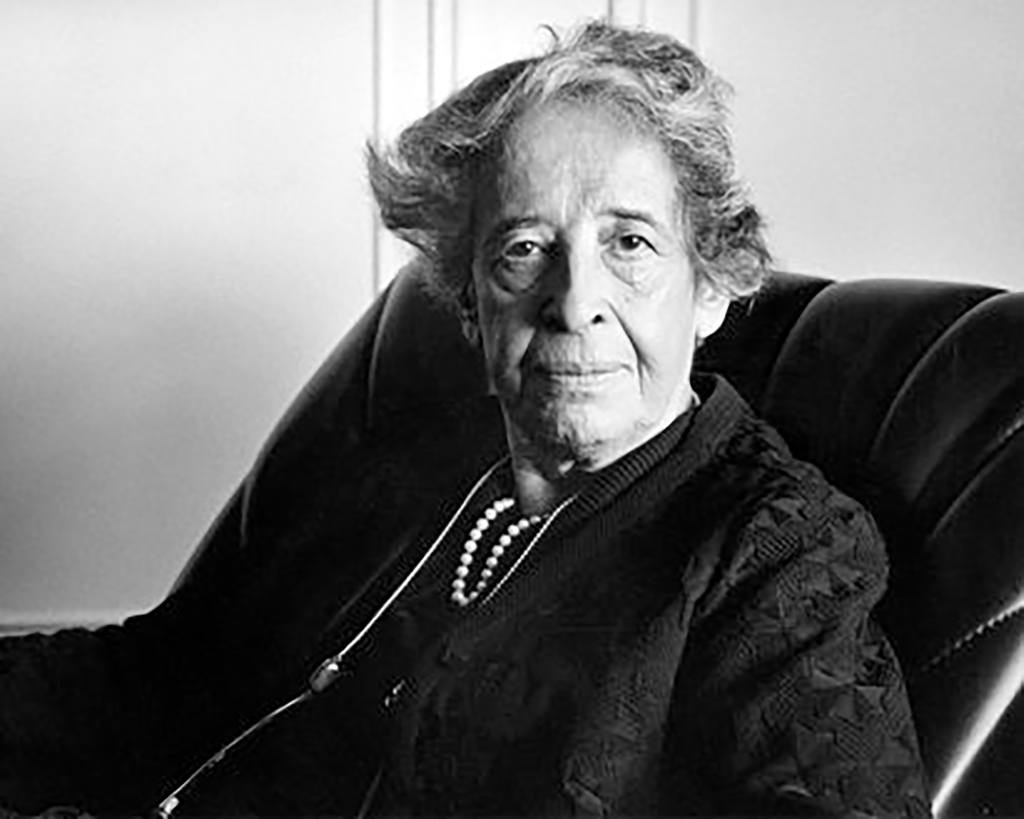
Hannah Arendt’s critique of cosmopolitanism resonates here. She warns against the dangers of a world government dissolving national traditions and plurality, resulting in a shallow, homogenized humanity. Arendt values rootedness in particular traditions, arguing that authentic political life emerges from the interplay of distinct nations and tribes. She rejects the utopian idea of universal citizenship, instead advocating for a federated system that respects local identities while fostering collaboration.
Tribalism as a Social Imaginary
Tribalism reflects deep connections to particular identities, such as family, community, or nation. The tribal imaginary is rooted in shared suffering, joy, rituals, and collective memory. It fosters solidarity, loyalty, and a willingness to sacrifice for one’s group. While tribalism often evokes negative associations—racism, nationalism, or exclusion—it also has redeemable aspects. It fulfills a human need for belonging and purpose, as seen in the solidarity of soldiers or the bonds of long-suffering sports fans. Tribalism can inspire mutual aid and resilience but also carries risks of dehumanizing outsiders.
My tribal identity as Canadian and Mennonite, are integral to my own sense of self. I reject extreme nationalism but acknowledge the necessity of tribal attachments for meaningful political and personal life.
Arendt’s nuanced perspective on Zionism illustrates the complexities of tribalism. Initially supporting Zionism as a response to European antisemitism, she later opposed the creation of a Jewish nation-state, fearing it would entrench tribal nationalism. Instead, she envisioned a federated homeland where Jews and Palestinians could coexist, emphasizing cultural flourishing over political sovereignty. While disappointed by the reality of Israeli statehood, Arendt maintained her support for Israel as essential for Jewish survival, embodying the tension between tribal and cosmopolitan commitments.
The Interplay of Tribalism and Cosmopolitanism
Our situation, especially in large urban centers, needs to hold tribalism and cosmopolitanism as not mutually exclusive but deeply intertwined. Cosmopolitans often form their own “tribe,” bound by shared values and worldviews. This tribal cosmopolitanism can lead to dismissiveness toward those with more particularist loyalties, highlighting the contradictions within the cosmopolitan ideal. I don’t buy the elite cosmopolitan detachment from local communities, which expresses a real lack of solidarity with the “tribal” poor or marginalized.
Arendt’s reflections further illuminate this dynamic. She emphasizes the need for plurality—a world of distinct yet interconnected tribes. Political life thrives on diversity and dialogue, not the imposition of universal norms. A pluralist politics requires respecting tribal attachments while fostering spaces for shared conversation and mutual understanding. Arendt’s hope lies in creating a common world through dialogue, where tribes coexist without dissolving into a homogenized cosmopolitanism.Toward a Pluralist Politics
Arendt’s vision of a federated world of tribes offers a framework for pluralism. Rather than erasing differences, this model celebrates diversity and interdependence. The tribe, like a tree, provides roots for belonging and branches for growth, supporting the pursuit of a shared, pluralist future. The tribe is both a refuge and a launching pad, enabling one to embrace the uncertainties of a cosmopolitan world.

 Raymond Klassen - Ideals and Identities
Leave a comment