
Let’s think about what it means to be able. It seems like a strange question, because, after all, “can” is one of the most commonly used words in the English vocabulary. It is such a pervasive concept that we would be tempted to think it is common sense and needs no investigation. Yet, from several different situations, the “ability” to do something determines whether something is accessible to a given person.
I first think about this in terms of access to the kitchen in my house. My wife is a markedly better cook than me. When she travels back to Thailand, I get access to the kitchen. When she is in our house, my access is limited to occasionally making pancakes for breakfast or spaghetti for dinner – and then cleaning up after meals. She is such a good cook that the kids and I recognize her cooking ability. If I cook, I get a “thank you;” if she does, a “That was great! Thank you so much!” is frequently heard. Her ability is an occasion for recognition.
We can also think of grades in school or access to university. The notion of ability is bandied about in every teacher or faculty room. “That kid can’t put two sentences together!” “If only the administration could get their heads out of their butts!” “That student can’t formulate a thought of their own.!” “I can’t help that student anymore.” In such sentences, the attending concept of recognition seems inherently woven with assessments of ability.
The context of adult education is particularly revealing. Recently, I have changed employment from a university to a working-class education facility to a community college. In the university, so much emphasis has been placed on individual ability. The individualization of abilities is attached to ideas of dependence and independence in the university. The emphasis in the university is on cognitive ability. The working-class institution I taught at a place that was re-training laborers who had been injured in the workplace. Here, the notion of ability was more palpable because the decision of whether or not a person was to receive ongoing funding was determined by their ability to work, but it clearly focused more on team efforts. If a person could no longer lift a 25 kg object, could they be retrained to do other work? Did they have the ability… to fit into team environments… as an individual?
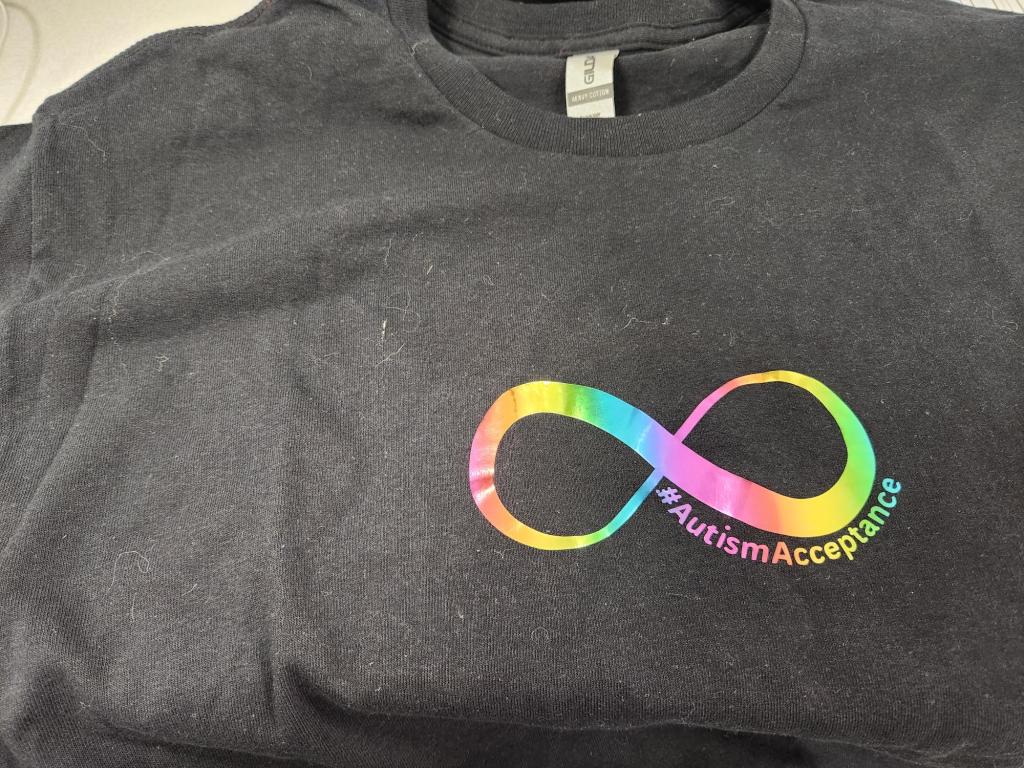
In the community college, the answer is a blend between the two. Here, I am now working with neurodivergent newcomers to Canada. It seems as if the dragon-like concept of ability rears its head. After 8 weeks of training, these neurodivergent individuals are placed in workplace environments where the stress on individualized abilities is, in fact, diminished. Don’t get me wrong, the community college still assesses people as individuals, but what they are being trained for are team environments.
I have experienced this dramatic turn in the concept of ability quite personally. The contrast between the individualized environment of my previous university teaching position and the team environment of the community college is remarkable and such a contrast is informative towards our concepts of recognized ability. In the university, I was evaluated as an instructor and program head as an individual. I worked in an isolated office without windows, and the connection with other colleagues was limited to information-dump faculty meetings, and over email. There was cognitive demand, yes, but an incredible amount of the value judgments were meted out as individuals. I had no chance to share the risks with anyone. If I screwed up, there was no one who “worked with” me. In the community college, I sit in a cubicle that is connected to my team members. I work with an administrative assistant, another person who works with domestic neurodivergent individuals, and a supervisor who has a heart for alternative models of acceptance. In such a team, the risks are shared.
In terms of ability, the team environment magnifies what we, as individuals can do. The individualized environment of the university was a minefield. Even as a Christian university, there were kind words, but no actual investment in the individual. Perhaps this is telling about more than just ability. At any rate, in terms of ability, education that embeds the employees and students of the institution in team fabrics will be better for all. The recognition that accompanies this team concept comes, as it were, naturally. People in teams feel greater worth – greater merit!
Might we reassess our idea of ability?
A Historical Perspective on Meritocracy
In “How the Ivy League Broke America”, David Brooks gives a compelling narrative about how our current meritocracy divided America. From the aristocratic ideals of the past to today’s focus on intelligence, the criteria for success have evolved—and not always for the better. While intending to promote fairness and excellence, this shift has instead fostered inequality and division. It’s time we redefine what matters most in human potential, moving beyond simplistic metrics like IQ and academic performance toward deeper, more holistic measures.
In the late 19th and early 20th centuries, lineage and social grooming often determined societal success. Elite institutions like Harvard prioritized “well-bred” individuals—white, Protestant, and male, often from affluent Mayflower-descended families. Character, manners, and service were emphasized over intellectual aptitude. Leaders like Franklin D. Roosevelt embodied this ethos, thriving not necessarily on intellect but on temperament and a commitment to public service.
However, as the Cold War loomed, a seismic shift occurred. The competition with the Soviet Union demanded a brain-powered elite. Universities redefined merit, prioritizing IQ and academic achievement. Tools like the SAT emerged, identifying the “smartest” students regardless of background. While this seemed equitable, it soon became evident that wealthier families could exploit the system, investing in test prep and private schooling to secure their children’s advantage. The meritocratic ideal inadvertently entrenched inequality.
The Failures of IQ-Centric Metrics
Despite their prominence, IQ and grades offer an incomplete picture of human capability. Academic success has little correlation with life outcomes. Studies show that traits like teamwork, humility, and persistence—qualities often overlooked in conventional metrics—are far more predictive of success. In school, compliance and individual performance dominate, whereas real-world challenges demand collaboration and adaptability.
This misplaced emphasis has created an elitist system, dividing society into two distinct castes: the affluent, with their inherited advantages, and the non-affluent, often left behind. By middle school, children from affluent families are already four grade levels ahead of their peers. This disparity extends into adulthood, affecting everything from life expectancy to social mobility. The result? A populist backlash against perceived elitism, exemplified by the rise of leaders like Donald Trump.
The True Markers of Human Potential
To address these systemic flaws, we must redefine “ability.” Cognitive intelligence — while important — accounts for only a fraction of what makes someone successful. As St. Augustine posited, humans are driven not solely by reason but by their deepest desires. What we yearn for shapes who we become. Traits like curiosity, emotional resilience, and a sense of mission are the true hallmarks of a fulfilled and impactful life.
Take curiosity, for instance. Lifelong learners like Warren Buffett demonstrate how a relentless pursuit of knowledge can lead to extraordinary achievements. Similarly, artists like Paul Cézanne, who continued to grow and innovate into their later years, illustrate the power of perseverance and adaptability. Success isn’t about being a “shiny” young prodigy; it’s about continuous growth and self-improvement.
The Role of Community and Collaboration
Human potential flourishes in relationships and teams. Research shows that successful individuals thrive not because of their solo brilliance but due to their ability to collaborate effectively. For instance, financial planners who leave their firms for higher pay often see their performance decline, underscoring the value of a supportive team environment. Similarly, surgeons perform better with familiar colleagues than with strangers.
Yet, our current systems rarely measure or reward these interpersonal skills. Schools, for example, prioritize individual achievements over group-based, project-oriented learning. Institutions like High Tech High in San Diego challenge this norm, emphasizing collaborative projects that mirror real-world problem-solving. By fostering teamwork and mutual respect, such approaches prepare students for the complexities of modern life.
Toward a Broader Vision of Merit
What if we evaluated individuals not by standardized tests but by their passions, character, and capacity for growth? What if we celebrated those who, like Yo-Yo Ma, inspire others through their humanity and connection rather than technical perfection? Social adeptness, empathy, and moral integrity are far more democratically distributed than IQ, offering a more inclusive framework for success.
The Christian tradition offers profound insights into this broader vision. Figures like Jesus Christ exemplify the ultimate image of humanity, rooted in love, humility, and service. By aspiring to such ideals, we move from ambition—focused on external achievement—to aspiration, centered on inner transformation and moral growth.
This is a new imaginary for our lives.
Personal Stories
Since I work with newcomers to Canada, and I live with people who are informed by Thai life, I am frequently privy to some rather critical observations of Canadian life.
My son has said that Canadians don’t really know how to talk with each other. Thais just talk about commonly experienced things; Canadians are scared to break the proverbial ice. He attends university in his first year, a university culture he castigates by saying: “For all the talk of community at uni, they don’t know how to practice it.” My wife and I compare our respective university experiences upon hearing this, and we long for the days when first-year year students were acclimated to university life by school clubs, and department mixers; but also by consistent engagement from those in our universities which was only stopped when it was time to write an essay or to go to bed.
One of my neurodivergent students insightfully asked, “Why do Canadians refuse to help an elderly person who has fallen over on the sidewalk?” My answer was, “Some Canadians are scared that they don’t have the ability to help (imagining that we would call a credentialed person to help, like a police officer or a paramedic to help).” He looked at me in astonishment, “We ALL have the ability to help!”
Taken together, these observations put the whole question of our national development in question. Is Canada really developed? Are the widespread mental health issues in Canada exacerbated by a kind of credentialism? Do we inhale too deeply the drug expressed as our credentials = our worth?
The Need for a New Imaginary
As society grapples with growing inequality and polarization, the need for a new understanding of merit is urgent. Let us again be open to the qualities that make us deeply human.

 Raymond Klassen - Ideals and Identities
Leave a comment