
Reflections on gratitude, responsibility and the possibility of beginning again
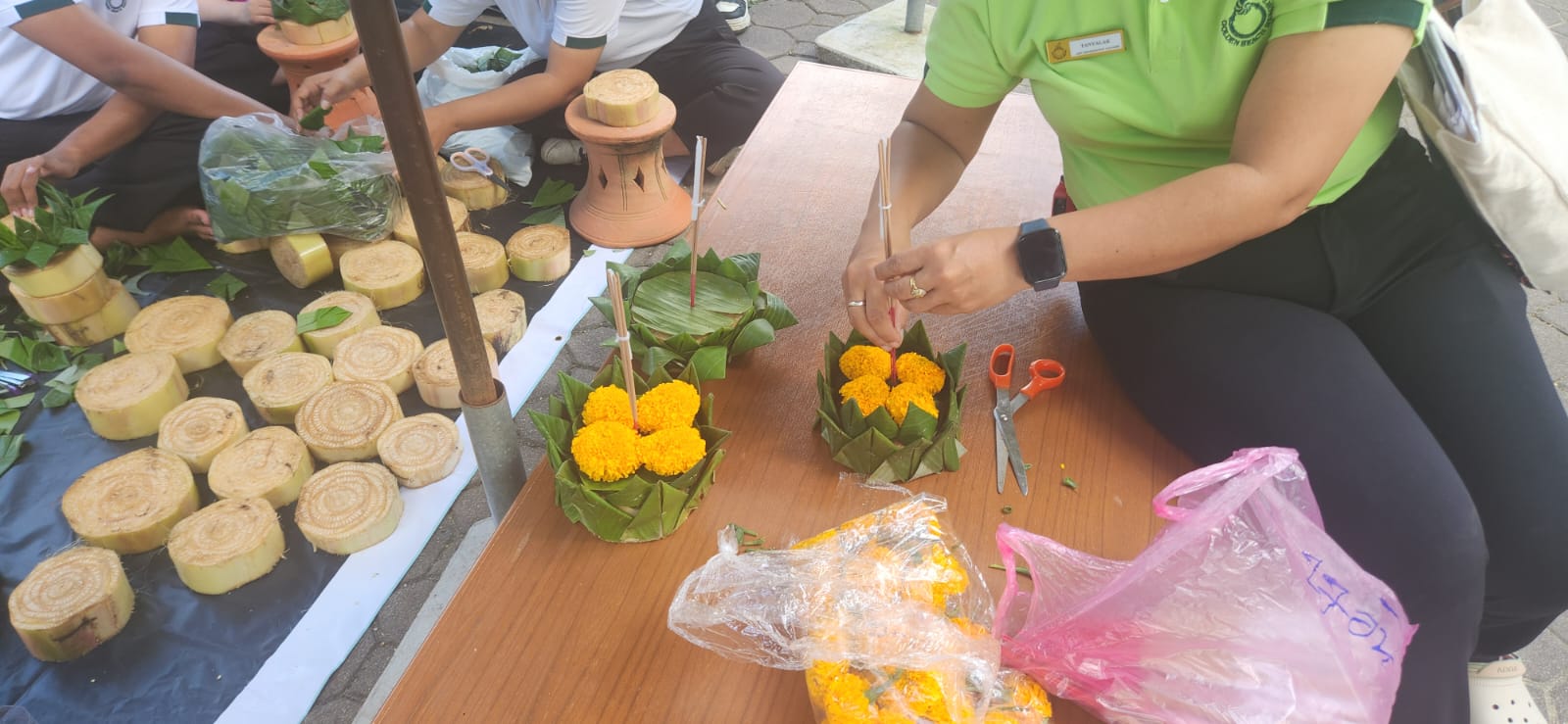
Tonight, under the full moon, people throughout Thailand will gather beside rivers, lakes, ponds and canals. They will light candles, burn incense, make wishes and gently release small vessels decorated with flowers and folded banana leaves onto the water. As these little lights drift into the darkness, something of the human condition is expressed through a remarkably simple gesture.
Loy Krathong (ลอยกระทง) is among the most beautiful of Thailand’s cultural traditions. Yet beneath its visual beauty lies a profound wisdom about what it means to be human. It is a celebration that invites us to consider what we have received, how we have responded to it, what we need to relinquish, and how we might begin again.
These questions lie close to the heart of my recent book, The Architecture of Authenticity.
The recognition that life is received
One of the traditional meanings of Loy Krathong is the expression of gratitude to Phra Mae Khongkha, the goddess of water. Water nourishes the earth, sustains communities and makes life possible. The ritual acknowledges something that modern life makes increasingly easy to forget: our existence depends upon realities that precede us and lie beyond our control.
We live in an age that places considerable emphasis on independence, achievement and self-determination. We are encouraged to construct our identities, pursue our ambitions and take ownership of our lives. Yet before we accomplish anything, we have already received much.
We have received our bodies, our languages, our cultural inheritances, our relationships and the natural world within which our lives unfold. Even our capacity to exercise freedom emerges from conditions we did not create.
Gratitude is therefore more than a pleasant emotional disposition. It is a form of truthfulness about the nature of our existence.
Gratitude and responsibility
What makes Loy Krathong particularly interesting is that gratitude is accompanied by a request for forgiveness. In honouring the water, people also acknowledge the ways in which they have polluted, wasted or otherwise mistreated it.
There is an important moral insight here. What sustains us also makes a claim upon us.
The recognition that we have received something valuable gives rise to a responsibility for how we treat it. This applies to the natural environment, but it applies equally to our families, friendships, communities and institutions. We benefit from realities whose continued flourishing depends, at least in part, upon our response to them.
In The Architecture of Authenticity, I describe authenticity as the construction of an answerable life. Becoming authentic involves learning to recognize the claims that life makes upon us and responding to them with increasing freedom and truthfulness.
The act of asking forgiveness acknowledges the distance between what we have received and how we have sometimes lived.
Even the choice of materials from which we make a krathong becomes meaningful. A ritual expressing gratitude to the water calls upon us to consider whether our offering might itself cause further harm. The integrity of our actions depends upon their coherence with the values we profess.
The wisdom of letting go
As the krathong moves away from the person who releases it, it may also carry a symbolic burden: sorrow, resentment, regret, anger or misfortune.
There are experiences that have shaped us which we cannot undo. There are wounds we cannot erase, decisions we cannot reverse and relationships we cannot restore to what they once were.
Yet the past need not determine the entirety of our future.
Part of the formation of an authentic self involves discerning what belongs within the continuing architecture of our lives and what we must allow to pass away. Some of the things we carry have become so familiar that we mistake them for essential features of our identity.
We may have organized our lives around an old injury, a disappointment, an inherited prejudice or a need to prove ourselves to others. Releasing these things requires courage because it changes our understanding of who we are and who we might become.
Letting go does not require forgetting the past or abandoning our responsibilities. It means allowing the past to inform our lives without granting it absolute authority over them.
The possibility of beginning again
The philosopher Hannah Arendt understood the human capacity to begin as one of the most remarkable features of our existence. She called this capacity natality. Through our words and actions, we can introduce something new into a world already shaped by history.
The spiritual significance of forgiveness is closely related to this possibility. Forgiveness can loosen the hold of past actions upon our future and reopen possibilities that once appeared closed.
As a Christian, I also recognize in this movement something of the spiritual journey toward becoming Christ-like: learning to receive life with gratitude, acknowledge our shortcomings with humility, relinquish resentment and become increasingly capable of love.
The religious traditions from which these insights emerge are distinct, and their differences deserve respect. Nevertheless, the encounter with another culture’s spiritual practices can illuminate dimensions of our own spiritual lives that we have neglected or forgotten.
Loy Krathong offers such an encounter.

A small light upon the water
There is something deeply human about standing at the edge of the water, holding a small light in one’s hands, and preparing to release it.
For a moment, we are invited to recognize both the fragility and the giftedness of our existence. We are reminded that much of what makes our lives meaningful cannot be possessed, controlled or preserved indefinitely.
Perhaps we might all benefit from asking ourselves the questions that this Thai tradition quietly places before us.
What have I received for which I have yet to express gratitude? Where have I failed to care for what has been entrusted to me? What am I holding onto that prevents me from becoming the person I am called to be? And what new beginning might become possible if I were willing to release it?
The architecture of an authentic life requires both construction and relinquishment. Its formation involves learning what to treasure, what to repair, what to preserve and what to release.
Tonight, as thousands of small lights drift across the waters of Thailand, we are offered a gentle reminder that becoming ourselves is a lifelong spiritual undertaking.
Sometimes, that undertaking begins by opening our hands.
สุขสันต์วันลอยกระทง
Happy Loy Krathong.
