
In Part 1, we learned that the problems with EDI were not that it used up limited resources or excluded the majority population; instead, EDI had become both a kind of virtue-signaling and a forced charity. In Part 2, we began to see that treating neurodiversity as a sickness leads to a an exclusionary practice that puts barriers in place to achieve human agency. When we dug into it, we found that human agency, while widely assumed as a human right, is, in fact hotly contested and often inarticulate. It turns out this so-called human right to agency is something that isn’t assumed; it must be achieved. These institutional barriers have become systemic, and as such, we may begin to see that EDI in post-secondary education cannot be easily judged by the language of oppressor vs. oppressed.
Equity, Diversity, and Inclusion (EDI) is essentially the conscious attempt to realize Jesus’s old and revolutionary phrase: “The last shall be first”, is found in Matthew 20:16. It’s part of a parable about laborers in a vineyard, where those who came late and worked for a short time were given the same reward as those who had worked the entire day. This verse emphasizes the idea that in the Kingdom of God, those who are humble and marginalized (the “last”) will be elevated and rewarded, while those who are proud and privileged (the “first”) may be brought down.
A secular liberal culture has forgotten that to fulfill the promise of EDI movements, i.e., it can’t be practiced as a kind of noble obligation.
I learned early in my adult spiritual journey that if one is to help the poor and marginalized, one must be willing to become marginalized. And as I wrote about in A Meaning of Otherness: “… When presented with diverse and excluded “others”, we must transform our institutions and systems in such a way that we all can feel at home.”
Systemic Education is just such an institution. It is not a place where all can feel at home.
- AN EDUCATIONAL SHIFT
Post-secondary education has traditionally been characterized by teacher-centered methodologies, often referred to as “chalk and talk,” where instructors deliver content through lectures, expecting students to passively absorb information. While this approach may suit some learners, it frequently falls short in addressing the diverse needs of neurodiverse students, including those with ADHD, dyslexia, autism spectrum disorders, and other learning differences. These students often require more engaging, flexible, and inclusive teaching methods to thrive academically.
Traditional lecture-based teaching assumes a uniform learning style among students, neglecting the fact that individuals process and comprehend information differently. This one-size-fits-all approach can create significant barriers for neurodiverse learners. For instance, students with ADHD may struggle to maintain focus during prolonged lectures, while those with dyslexia might find it challenging to process information presented solely in text form. Consequently, these students may experience increased frustration, decreased motivation, and lower academic achievement.
To address these challenges, educational institutions are increasingly adopting the principles of Universal Design for Learning (UDL). UDL is an educational framework that aims to make learning accessible and effective for all students by providing multiple means of representation, engagement, and expression. This approach recognizes the variability in learners’ needs and preferences, offering flexible options to accommodate diverse learning styles.
Implementing UDL involves presenting information in various formats—such as text, audio, video, and interactive media—to cater to different sensory and cognitive preferences. It also includes incorporating diverse teaching methods and materials that tap into students’ interests, thereby enhancing motivation and participation. UDL also involves repetitive classroom structures where neurodiverse students are offered the security of a stable classroom routine. Furthermore, UDL allows students to demonstrate their understanding through various modalities, including written assignments, oral presentations, artistic creations, or digital projects. By integrating UDL principles, educators can create more inclusive learning environments that not only support neurodiverse students but also enrich the educational experience for all learners.
A critical aspect of implementing UDL effectively is the decentering of the traditional teacher role. In a learner-centered paradigm, educators act as facilitators or guides, empowering students to take an active role in their own learning. This shift requires moving away from authoritative knowledge delivery toward a more collaborative and participatory approach.
Decentering the teacher involves promoting student agency by encouraging students to set their own learning goals, make choices about their learning processes, and reflect on their progress, thereby fostering a sense of ownership and intrinsic motivation. It also entails facilitating collaborative learning by designing activities that require peer interaction and teamwork, helping students learn from diverse perspectives and develop essential social skills. Additionally, providing scaffolding and support tailored to individual needs ensures that all students can access and engage with the curriculum effectively. This transformation not only benefits neurodiverse learners but also prepares all students for real-world scenarios where collaboration, problem-solving, and self-directed learning are invaluable.
A study titled “Promoting Inclusive Education through the lens of UDL: A Teacher Professional Development Action-Research” explored the impact of UDL on inclusive teaching practices. The research involved 21 teachers in a lower secondary school who participated in a professional development program focused on UDL principles. The study aimed to assess whether implementing UDL could enhance inclusive teaching approaches and positively influence students’ learner agency. The findings indicated that teachers reported adopting more flexible and varied instructional strategies, making learning more accessible to all students. Students became more active participants in their learning, demonstrating greater motivation and engagement. Teachers developed a deeper understanding of inclusive education and felt more competent in addressing diverse learning needs. This case study underscores the effectiveness of UDL in adapting educational practices to better serve neurodiverse learners. However, the basic paradigm, in which the individual learner and the teacher are the primary relationship of the classroom remains relatively undisturbed.
- UDL: JUST THE BEGINNING
UDL does an exceptional job of providing access to education. However, a Social Model of Learning takes learners beyond the gateway issue of access; it nurtures agency in a much more systemic way.
Structuring classes around small groups of three to five members extends beyond the benefits outlined by UDL and taps into the structures of psychological recognition that are identity-forming from significant others. (Burgess, 2020) Philosopher Hannah Arendt emphasized the importance of the “realm of privacy,” where individuals are recognized by their significant others, contributing to authentic identity formation. (Arendt, 1958) In small group settings, students engage in meaningful interactions, receive personalized feedback, and build relationships that affirm their unique identities. This environment fosters a sense of belonging and validation, essential components for personal growth and learning. In fact, such a structure of learning, where information is absorbed, altered and applied through the lens of the group, has been found to magnify outcomes and exceed expectations.
Transitioning from traditional, teacher-centered education to a more inclusive, learner-centered approach that embraces UDL principles is crucial for accommodating neurodiverse learners in post-secondary education. It involves the learners better in the learning. It advances on social learning conceptions developed by Albert Bandura in which modelling of behavior by learners through observation and imitation was the limit to the learner’s learning process. (Bandura, 1977) This shift necessitates decentering the teacher’s role and actively involving significant others in the educational process. It isn’t merely a “flipped classroom”; it is a social structure. By including UDL as an important ingredient in classrooms and by structuring classes into small groups, institutions can create enriching learning environments that see inclusion as a steppingstone to recognizing and valuing diversity, ultimately leading to more equitable and effective educational outcomes for all students. At their core, these outcomes are not as limited as they have been. The outcomes more thoroughly foster human agency. (Bandura, 1997)
A Social Model of Learning that employs UDL principles means more than being simply learner-centered; a social model of learning harnesses certain psychological need-fulfillment and builds networks of support that advantage learners well beyond the classroom. Small-group instruction is an educational approach that divides students into smaller clusters, allowing educators to tailor lessons to individual learning needs, preferences, and abilities. This method offers several key advantages over traditional whole-class teaching. Firstly, it facilitates personalized learning by enabling teachers to assess each student’s strengths and areas for improvement, thereby customizing instruction to suit their unique requirements. For instance, in a university-level biology course, an instructor might divide the class into small groups to analyze complex case studies. Secondly, small groups encourage active participation, as students are more likely to engage in discussions, ask questions, and collaborate with peers in an intimate setting. This heightened engagement fosters a deeper understanding of the material and enhances retention. Additionally, small-group settings provide immediate feedback opportunities, allowing teachers to promptly address misconceptions and guide students effectively. This approach also supports neurodivergent learners by offering a more accessible environment tailored to diverse learning styles. Overall, small-group instruction creates a supportive and collaborative atmosphere where every student can thrive, making it a versatile and effective educational strategy across all grade levels. (Burgess, 2020)
To summarize this briefly, a Social Model of Learning is one that leverages the social group to involve the learner not only to develop everything from content-based courses (such as a second-year history class) to competency-based courses such as work placement and employment programs. The authors have been instructing with such a model at Norquest College’s Transition to Employment Program as well as a program for attaching neuro-divergent newcomers to Canada with employment. However, this model was also employed in courses on business communication in a project management program at MacEwan University as well as in academic writing, philosophy, and interdisciplinary studies programs at the King’s University.
The following case studies are taken from Norquest College’s (Edmonton, Canada) ongoing research.
- CASE STUDIES
3.1 A Community of Strength
Student G was one of seven children in his family. With limited resources, his family made the difficult decision of choosing who would have the opportunity to build a better future abroad. After weighing the pros and cons, they chose him. When he arrived in Canada from Cameroon, he carried the weight of their hopes on his shoulders. He moved in with his grandfather and cousin, eager but unsure of where he belonged in this new world.
Early in his schooling, Student G was referred for a psychological assessment to determine his cognitive functioning and to provide recommendations for his educational programming. The results revealed significant challenges—global weaknesses in verbal comprehension, perceptual reasoning, working memory, and processing speed, all of which fell within the Extremely Low range. He struggled with visual and hands-on tasks, abstract nonverbal information, and flexible thinking. These difficulties, combined with the fact that English was his second language, made reading and math particularly difficult. Despite this, he had developed impressive strategies to mask his struggles, adapting and blending in by knowing exactly what to say and when.
When he joined our Transitions to Employment program, something remarkable happened. Instead of feeling isolated, he found himself in a community of peers who understood his challenges. Rather than being seen through the lens of his academic struggles, he was embraced for his strengths—his kindness, his ability to connect with others, and his natural leadership. He quickly became one of the most well-liked students, not because he excelled in traditional academics but because he led with a smile and uplifted those around him.
His peers naturally formed a support system around him, holding him accountable by texting him if he missed a day (which was rare) and standing by him when he faced emotional dysregulation. It was a low-risk, high-reward space—one where strengths were refined, and barriers became steppingstones.
For his work experience, he was placed at DuraBuilt Windows and Doors, a setting that played to his strengths. He showed up every day, built strong relationships with his coworkers, and proved his dedication. The only challenge was the tape measure—his reading and math difficulties made it nearly impossible to use. Rather than leaving him to struggle alone, the community around him stepped in.
Our Disability Studies practicum students working with our program took on the challenge, offering weekly tutoring sessions at the library. His classmates, recognizing his determination, joined in, practicing measuring during Employment Prep in a collaborative, low-pressure environment. What started as his challenge became their challenge—because his success was tied to theirs.
Additionally, in our program, students are paired with mentors from other areas of the College. He was matched with an incredibly supportive academic upgrading instructor. When I explained what was at stake, she took it upon herself to help him learn how to read a tape measure. Through patience, consistency, and a belief in his potential, she provided him with the tools he needed to succeed.
By June 2024, he was offered full-time employment. The pride in his voice when he shared the news was unmistakable. He had refined his skills, overcome his barriers, and, most importantly, proven to himself that he belonged. His success wasn’t just his own—it was the success of a community that had lifted one another up, proving that when learning is social, everyone wins.
3.2 More Than Just a Meal
In our Transitions to Employment program, cooking days are more than just an exercise in the kitchen—they are a lesson in independence, teamwork, and confidence. Built into the Recreation and Community Living curriculum, these sessions teach students how to navigate a kitchen, manage simple recipes, and prepare meals they can replicate at home. More than that, they create opportunities for students to take ownership of tasks, problem-solve, and refine their strengths in a low-risk, high-reward environment.
Each cooking day, students choose their own tasks—some opt to prepare the main dish, while others take charge of washing dishes or doing laundry. Since roles require between two and six students, small social learning communities form naturally. The goal is clear: work together to get the meal on the table, then clean up and return the classroom to its original state.
As the cooking begins, so do the conversations. There’s something about being in the kitchen that breaks down barriers. When a student struggles to read a recipe, a peer steps in to help. When someone hesitates with a knife, another offers a demonstration. “How do you peel a potato?” “What’s the best way to cut an onion?” These questions don’t go unanswered. Instead of relying solely on the instructors, students turn to each other, reinforcing their strengths through shared experiences.
For many, this is their first real opportunity to cook on their own. It’s not just about food—it’s about identity formation, about seeing themselves as capable, independent, and valued members of a group. Each success, whether perfectly measured ingredients or a well-chopped vegetable, builds confidence. They refine each other’s skills, learning in ways that extend far beyond the kitchen.
When the meal is finally ready, the tables are arranged in a U-shape, forming a ‘talking circle.’ The tables are set with proper utensils and plating, creating a sense of occasion. Invited guests arrive, adding to the sense of community and shared experience. Before eating, the group reads a poem relevant to the month, setting the tone for meaningful discussion. As the meal begins, conversations flow naturally—even the quietest deep thinkers join in. “What do you think of this flavor?” someone asks, sparking dialogue and connection.
3.3 I Love Cars
Student S had suffered significant bullying in both his schooling years and throughout his newcomer experience in Canada. He had reported having difficulty breaking ice in times he had met Canadians for two reasons: his English was too weak, and he had a hard time making eye contact with others, as he tended to look away. In an intake interview for a work placement program for newcomers, (Klassen et al., 2024) Student S attributed this wanting to avoid eye contact because he did not trust his abilities to read social cues in “a new country. And he has always felt afraid of judgment.” (Student S)
Student S had undergone an eight-week training course using a social model of learning. In that class, he had learned that he showed signs of autism and had learned that his attention to detail was a kind of special skill that could be applied to numerous careers. Throughout the course he had accomplished tasks within a group context, which included learning how to interpret and respond to social cues. Largely, he had picked up these skills through watching video examples and completing group exercises with other newcomers at the same language levels but with other kinds of neurological differences. He reinforced practiced skills within the group and benefitted from others who were more proficient with understanding social contexts.
Unlike most learners with the same profile, Student S had picked up particular social skills and practiced them through group reinforcement. Other members of his group, who did not present as autistic, but had various signs of Post-Traumatic Stress Disorder or attention deficit hyperactivity disorder had passed on their understanding to Student S in such a way that he could then apply it to his first job interview at a local car wash. When asked why he wanted to wash cars, he replied, “I love cars!” He got the work placement, succeeded, and is now permanently employed.
3.4 An Example of a Social Model of Learning
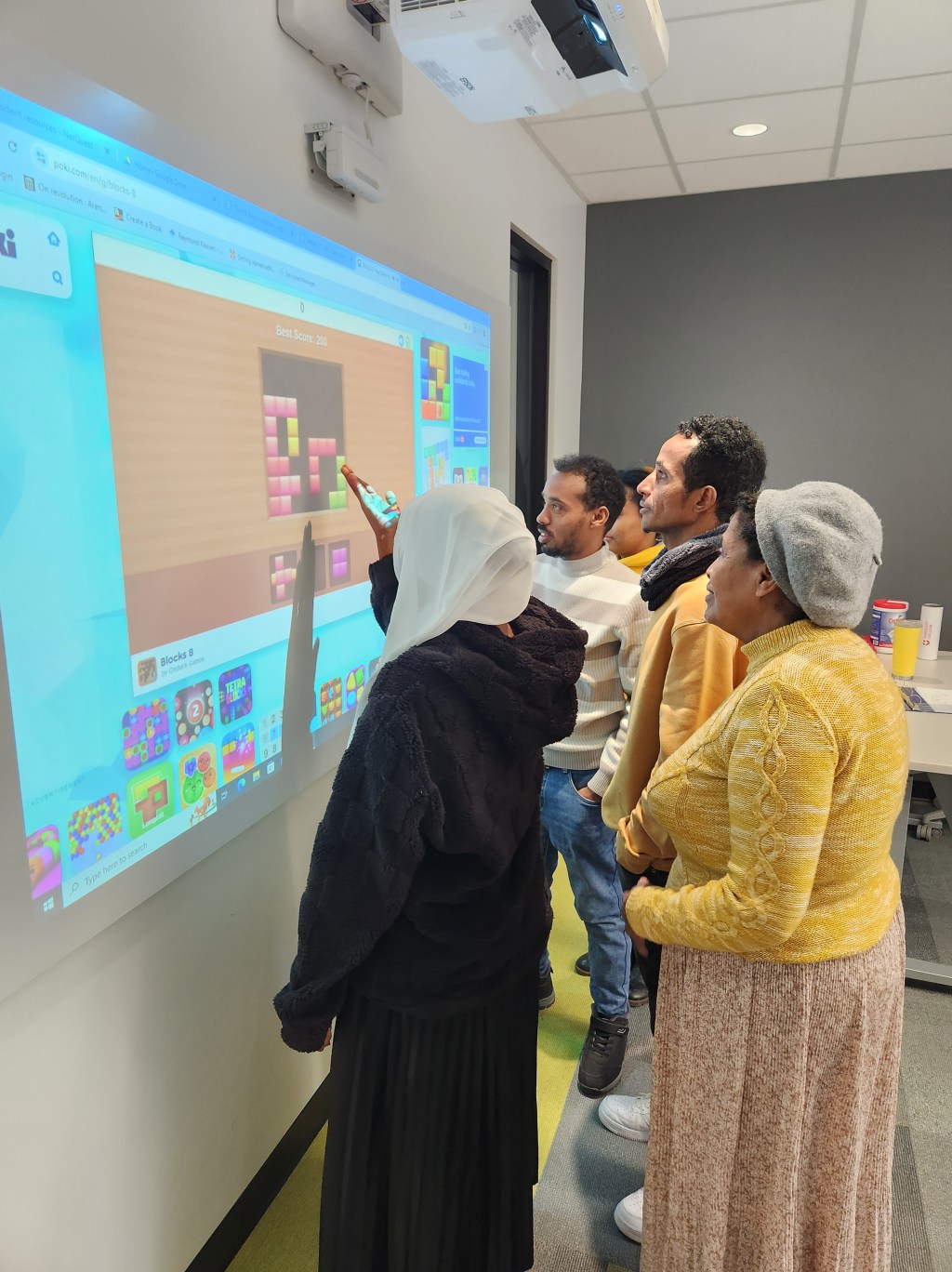
Working with neurodivergent newcomers to Canada has provided an excellent context to practice a Social Model of Learning. (Klassen, et al., 2024) In classes of 10 adult learners from a range of countries including India, Afghanistan, Ethiopia, Eritrea, Iraq, Somalia, Togo, and Israel, learners have been divided into groups of five and have worked with the same groups for the entire term.
Different neurodivergent strengths are grouped together, and a variety of workplace tasks and skills have been practiced. The selection of activities ranges from personal self-knowledge, intercultural education, puzzle-completion, digital literacy, safety and workplace communication tasks that are benchmarked upon group completion and individual comprehension. However, the criteria for success in any task is not measured by individual accomplishment, but in terms of group accountability.
The initial instinct for taking this approach emerged from the instructor’s exposure to indigenous Canadian ways of learning, and multi-year experience in the communal cultures of East and Southeast Asia, Arabic learning styles and East Africa. It was thought that more communal styles of learning were more easily adopted by these newcomers, and more effective than colonial academic expectations revolving around the individual and taking place primarily between an isolated learner and a knowledge-giving instructor.
Preliminary results with neurodivergent newcomers also reveal a particular truth: their resilience that has developed from previous traumatic experiences was echoed in the groups they studied. They not only developed particular skills, but they also forged a community of significant others that serve them well after they have left the program. For newcomers, this newly found group of significant others has an essential identity-forming character that newcomers frequently lack if they were to take English and settlement programs through government-sponsored English programs such as LINC (Language Instruction for Newcomers to Canada). Not only did their English improve more quickly, but so did their settlement.
Conclusion
These case studies drive home the point: when we learn socially, we learn better. The results are relationally-driven, and relationally directed. Beyond the particular effectiveness of the pedagogy, the learners’ are better formed, more resilient, and better-networked after they have left the classroom. They have provided evidence that they are better formed and more accountable.
For those of us who are neurotypical, what does this mean? It means that these “last” ones have revealed something altogether crucial for the neurotypical “first” ones. We need to give credit for our success to the communities into which we are born, and to whom we are committed. They less we do, the less agency we have.

 Raymond Klassen - Ideals and Identities
Leave a comment